Stop Relying on Referrals: An Evergreen Lead System for Financial Advisors
Build a predictable pipeline of advisor leads with SEO, blog content, lead magnets, email nurture, and organic social, while staying compliant with the SEC Marketing Rule.
Updated: 10/20/2026 by Cullen Fischel

The problem with building a practice on introductions
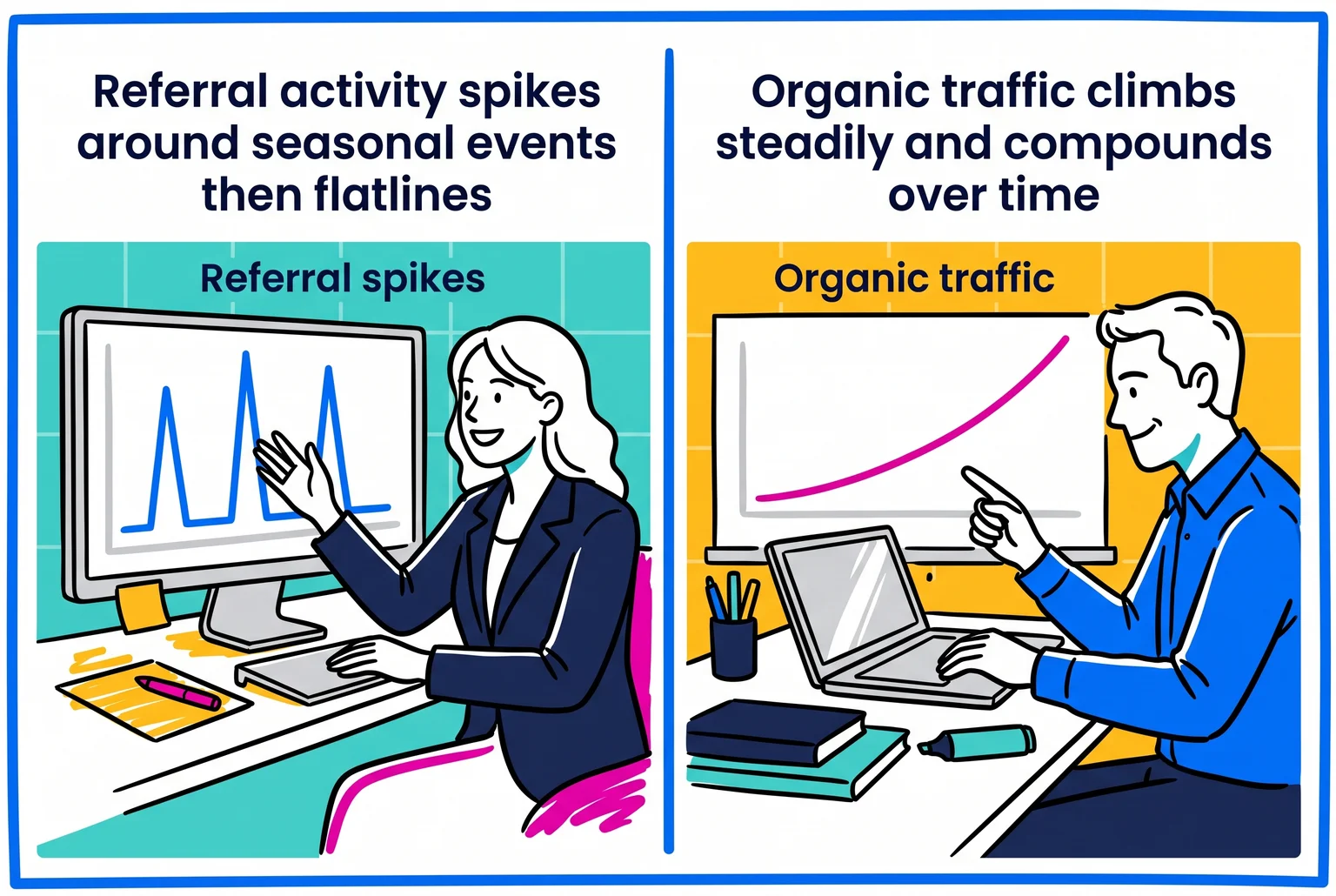
Referral-driven growth for advisory practices tends to cluster around a handful of predictable moments: January goal-setting, tax season, mid-year reviews, and year-end planning. That's when clients are most engaged and most likely to mention your name to a friend or colleague. It's also why many advisors experience a familiar rhythm: a burst of new client conversations in Q1, then a lull that stretches through summer and into fall.
Paid advertising is often the default fix for that lull, but it comes with its own limits. Money is spent, a click happens, and once the budget stops, the traffic stops. It's rented attention: it disappears the moment the campaign ends.
Key points to keep in mind:
- Referral flow is event-driven, not evenly distributed across the year
- Paid ads produce traffic only as long as spending continues
- Owned content and SEO can keep generating visitors and leads long after publication, at low ongoing cost
An inbound system built on your website, blog, and search visibility works differently. Content published today can still be found and read two, three, even five years from now. Some analyses of evergreen content report that the 18-to-24-month window after publication is often the most productive stretch for lead generation, well after the initial launch period. Growth built this way doesn't reset every January. It accumulates.
Your website has to do a job before SEO can do its job
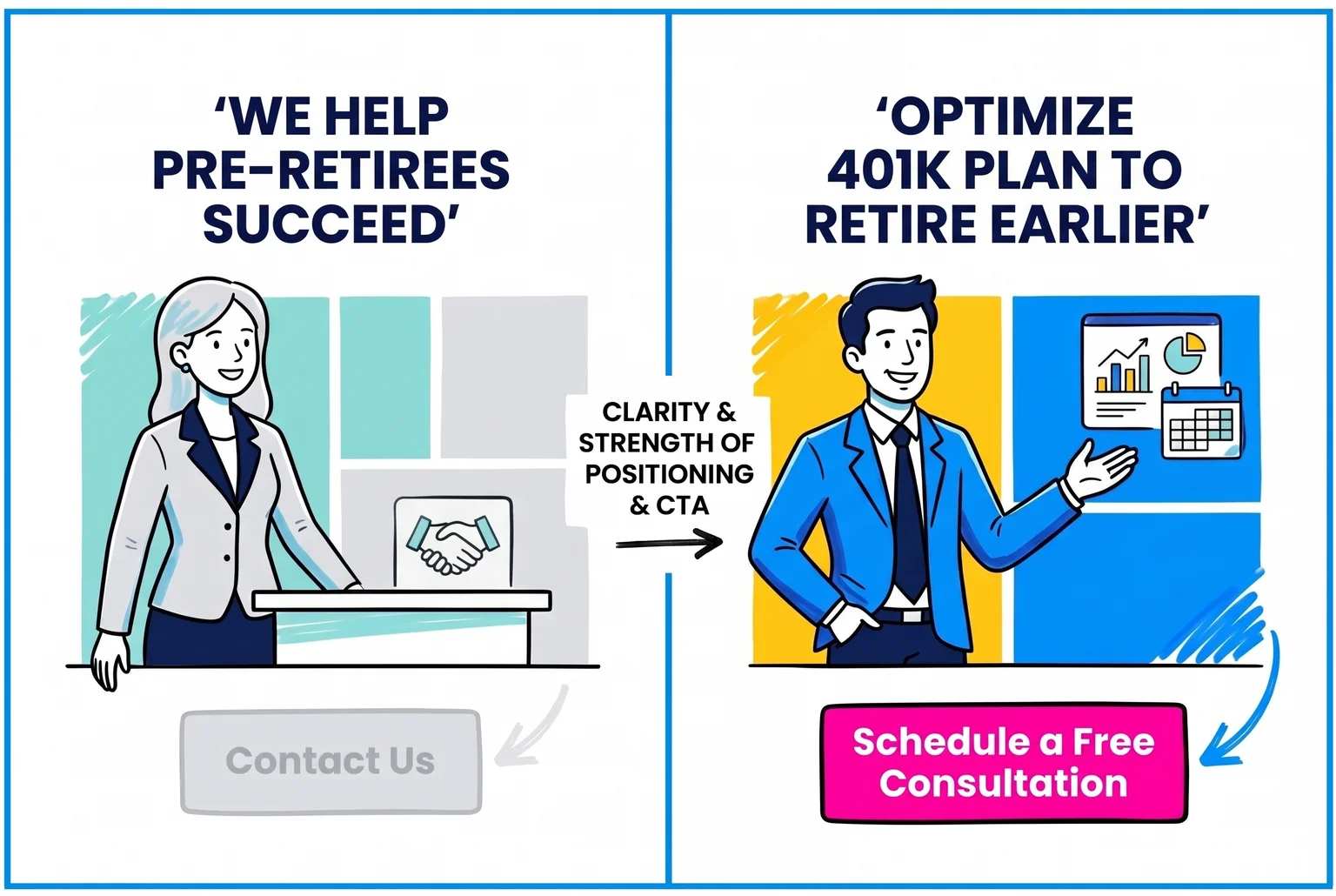
SEO and content bring visitors to your site. What happens next depends entirely on whether the site is built to convert them. Send traffic to a brochure-style site with a vague headline and a generic "Contact Us" button, and you're spending effort to fill a leaky bucket. Fix the site first.
Lead with who you serve, not who you are. The homepage headline should state the target client and the outcome you help them reach, not a biography or a mission statement. A visitor should know within seconds whether the firm fits their situation, whether that's pre-retirees in a specific city, business owners planning an exit, or physicians managing student debt. Naming the niche, the approach (fee-only, tax-focused, fiduciary), and the core services directly on key pages lets the wrong visitors self-select out and the right ones lean in.
Pick one primary action and repeat it. Most high-converting advisor sites are built around a single goal, usually booking a discovery call, with every page element pointing toward it. Swap generic labels like "Learn More" for specific, expectation-setting language such as "Schedule a Free Consultation" or "Book Your Planning Session." Put that CTA in the hero section, again after any trust-building content, and once more near the bottom of the page. Multiple competing buttons create decision paralysis; one clear path doesn't.
Lower the friction between interest and action. Forms should ask for name, email, phone, and one qualifying question, nothing more. Every additional field chips away at completions. Embedding a scheduling tool, rather than routing visitors to a static contact form, cuts a step out of the process. Near the CTA, a short explanation of what happens next (what the call covers, how long it takes, whether it's really free) addresses the hesitation that keeps prospects from clicking at all.
Round it out with trust and mechanics. Credentials, regulatory disclosures, and a few case studies belong near conversion points, not buried on an "About" page. And none of it converts if the site loads slowly or breaks on a phone: mobile responsiveness and page speed affect both usability and abandonment rates before a visitor ever reads your content.
With that foundation in place, the traffic you build through SEO has somewhere useful to land.
Getting found by the right prospects, not just more prospects
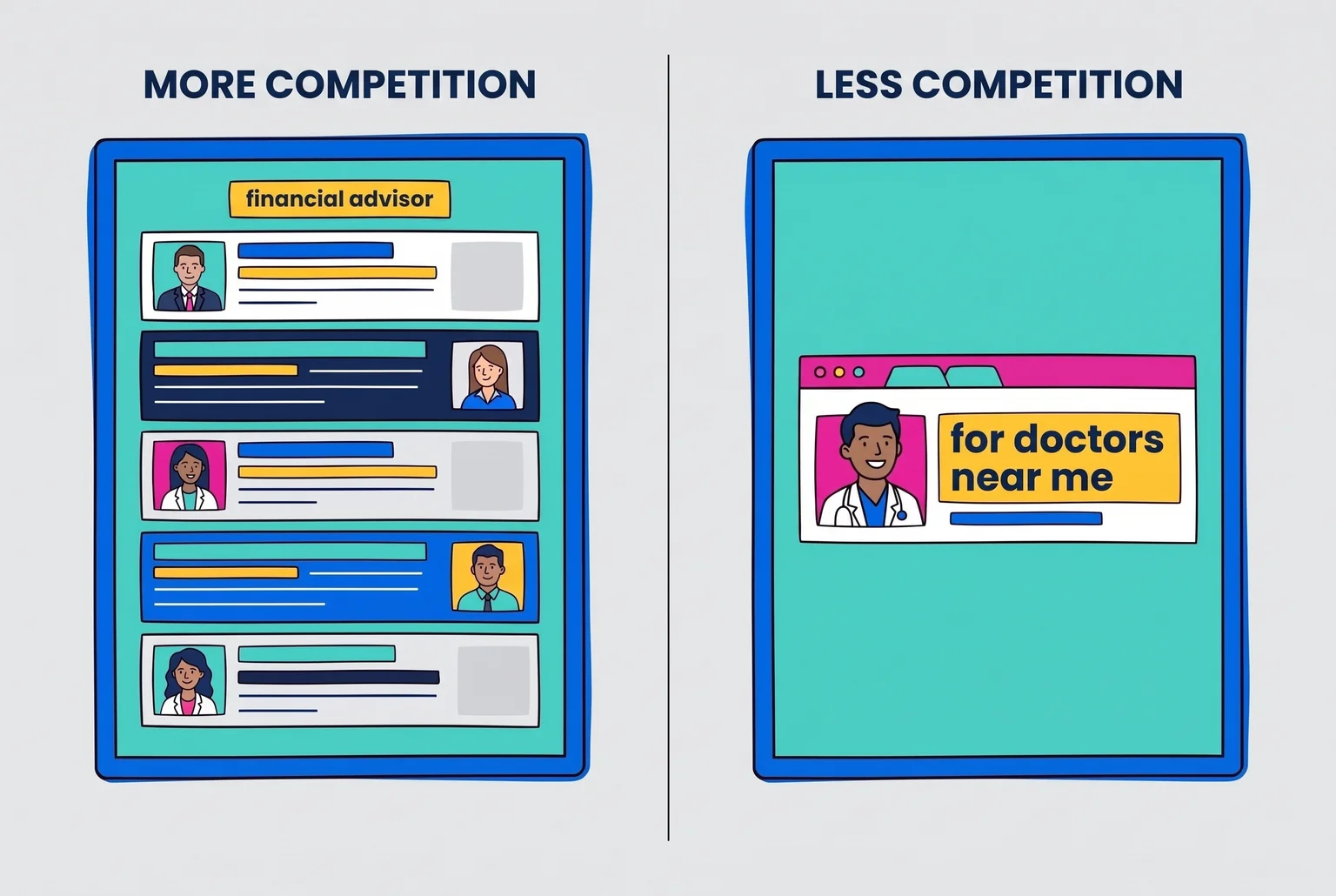
Generic SEO advice fails advisors because it optimizes for volume instead of fit. Ranking for "financial advisor" puts a firm in a fight against thousands of competitors nationwide for a term that says nothing about who the visitor is or what they need. The better approach targets keywords that combine expertise with a prospect's specific situation, phrases like "financial advisor for doctors," "physician wealth management," or "fee-only advisor" plus a city name. These searches carry less volume but far higher intent.
A workable keyword mix leans heavily toward this specific, lower-competition tier rather than broad terms like "wealth management advisor" or "retirement advisor," which are harder to rank for and attract browsers, not buyers.
On-page basics that support this strategy:
- Unique title tags on every page, roughly 50 to 60 characters, leading with the primary keyword
- A clean header structure, one H1 per page with H2 and H3 tags organizing subsections
- Internal links using descriptive anchor text (not "click here") so search engines understand what each linked page covers
Local SEO, done right, includes:
- A complete, accurate Google Business Profile with the correct category (Financial Planner, Financial Consultant, or similar), consistent hours, and a working link back to the site
- Profile descriptions that are factual and compliant, describing services without performance promises
- Authentic photos of the office and team rather than stock imagery
- Consistent name, address, and phone number across directories and professional listings
- Ongoing review responses and Q&A activity, handled in line with firm compliance policy
None of this involves paid search. Organic rankings built around specific, well-optimized pages tend to hold their position once established, which means the traffic they generate keeps arriving without a recurring media spend. The tradeoff is time: a niche keyword strategy takes months to show up in rankings, and it depends on the content existing to support those terms in the first place, which is where the next piece of the system comes in.
Turning search rankings into a resource prospects trust
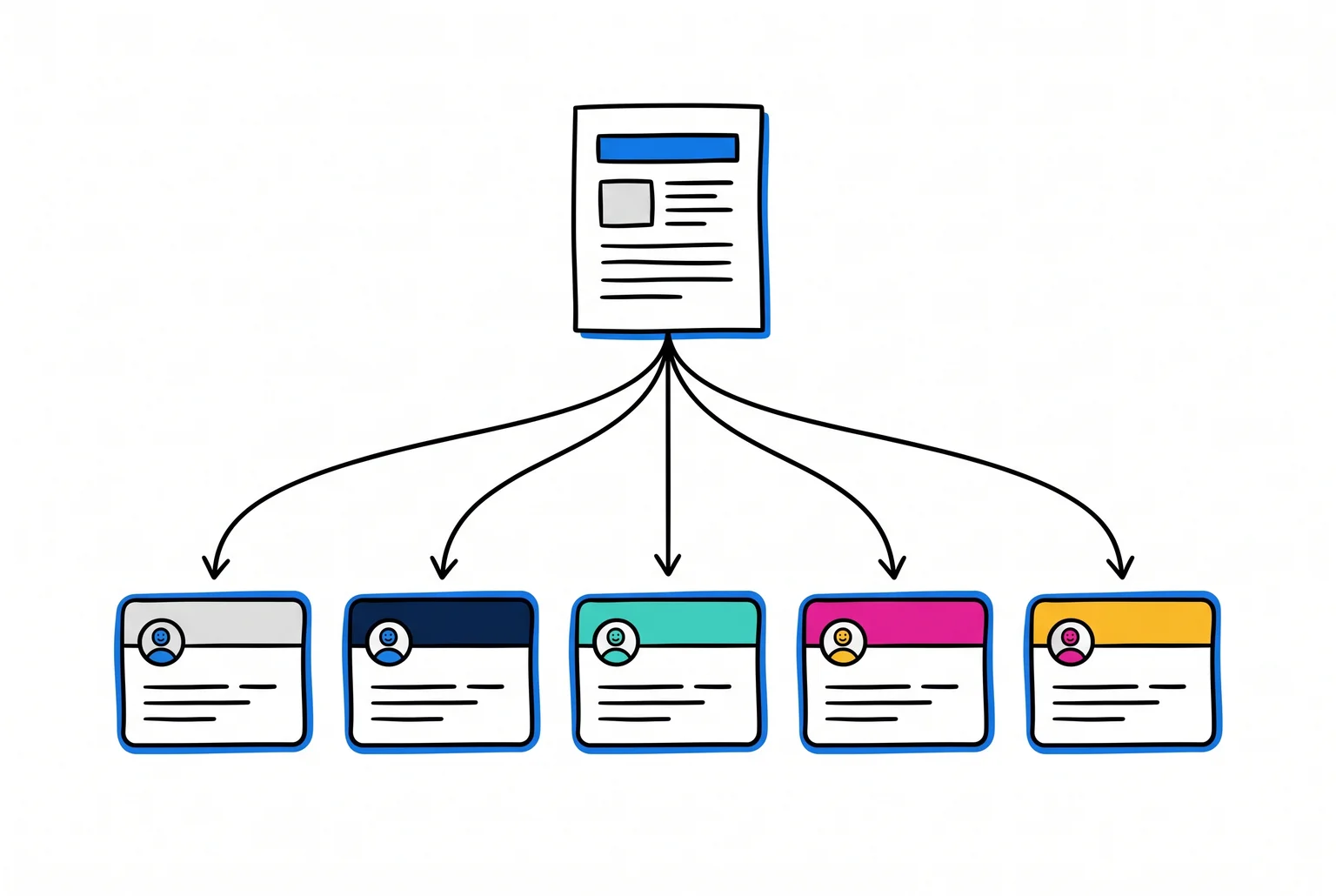
A website ranking for the right keywords still needs content behind it. That's where a blog built around a pillar and cluster structure does the work. One broad page, say "Retirement Withdrawal Strategies," acts as the hub. Around it sit cluster articles on the 4% rule, guardrail approaches, sequence-of-returns risk, and how much a retiree can safely withdraw in a given year, each linking back to the pillar page. Search engines read that internal linking pattern as a signal that the pillar page is the authoritative source on the topic, which can help it rank higher over time as more cluster pages get added.
Retirement planning and tax-efficient investing work well as pillar topics for advisors because the underlying questions don't expire. "How much should I save for retirement?" gets asked by every generation entering their 40s. "When should I start Social Security, at 62, 67, or 70?" comes up whether the market is up or down. Roth conversion timing, RMD rules, and asset location questions stay relevant year after year, which is what separates an evergreen content library from a stream of one-off posts tied to news cycles or seasonal promotions.
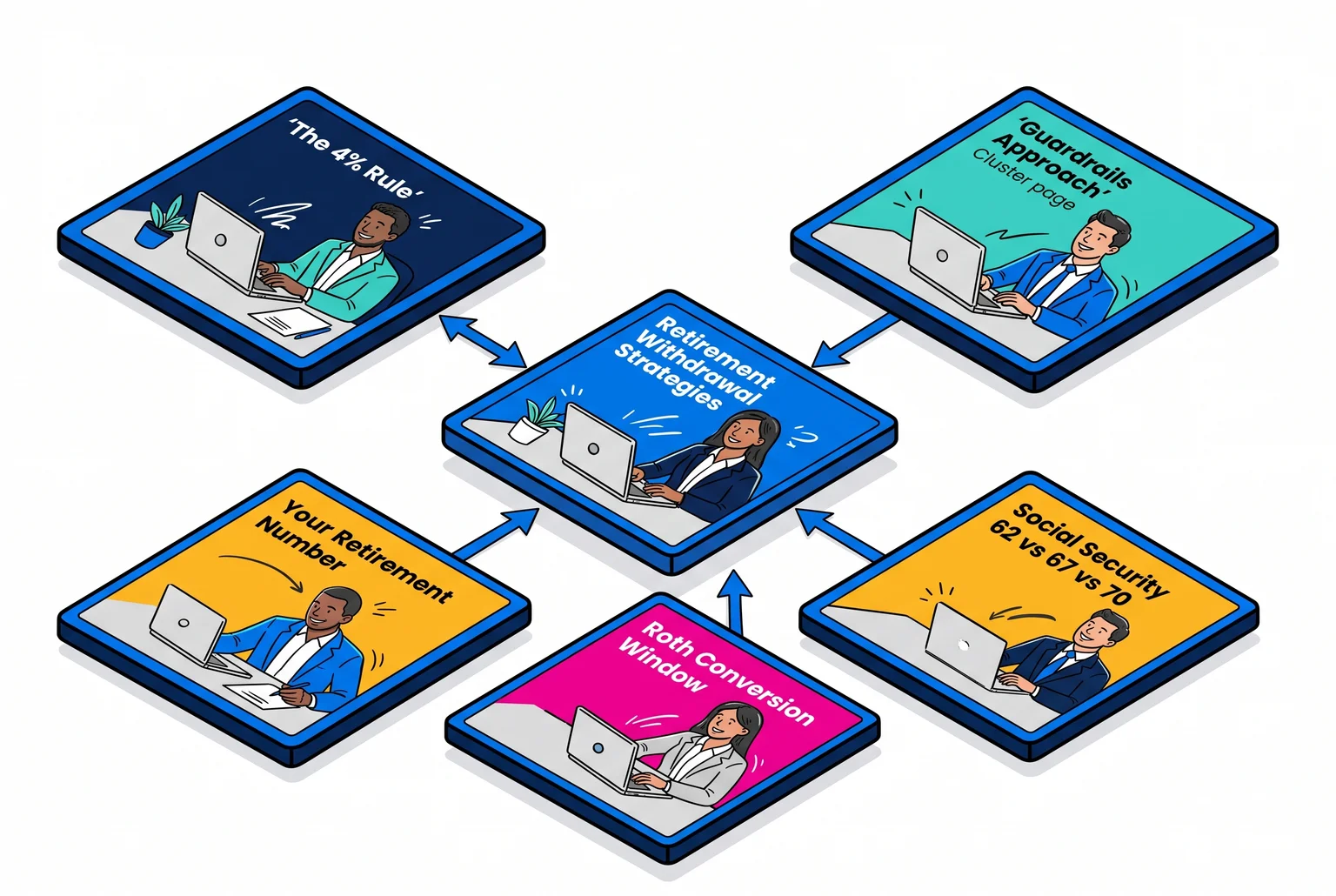
Cadence matters more than volume. A firm publishing one well-researched cluster article every two to three weeks, tied to a clear pillar structure, builds a more coherent knowledge base than one publishing sporadically at higher volume. There's no guaranteed timeline for ranking movement, but a site with 15 to 20 interlinked articles on retirement income demonstrates more depth than a site with three disconnected posts, and that depth is what search engines and prospects both notice.
Why this works: a prospect who finds one article and sees eight related ones on the same topic reads the firm as a specialist, not a generalist posting occasionally.
Turning readers into contacts, then contacts into conversations
A blog post that ranks well still ends when the reader closes the tab, unless there is a way to capture their contact information first. That's the job of a lead magnet: a specific, immediately useful resource offered in exchange for an email address. For advisors, this tends to work best as a retirement readiness checklist, a Roth conversion worksheet, or a short guide tied directly to the article the visitor just read. A generic "financial planning guide" pulls fewer signups than a narrow tool that answers one question the visitor already has in mind.

Once someone opts in, an automated sequence should take over. A workable structure:
- Email 1 (immediate): deliver the promised resource and set expectations for what's coming next, without pitching anything.
- Emails 2 to 3: address one problem or misconception per message, moving from general education toward the advisor's specific approach to it.
- Email 4: introduce a case example or client story, framed to build credibility rather than promise results.
- Email 5: offer a low-pressure next step, such as a complimentary portfolio review or a time-boxed consultation with limited slots.
Most professional-services sequences run four to six emails over two to four weeks. Each one should carry a single call to action, since stacking multiple asks in one email tends to blunt response.
The compliance layer matters here as much as anywhere on the site. Under the SEC's Marketing Rule 206(4)-1, any language implying guaranteed outcomes ("this checklist will maximize your retirement income") is off-limits, and testimonials or client stories used in email require the same disclosures and consent that apply on the website. A safe phrasing habit: describe what the resource covers, not what it will produce for the reader.
The consultation offer itself should read as a natural continuation of what the reader has already learned, not a sales pitch dropped into their inbox.
Turning one blog post into a week of LinkedIn content
Once a blog post exists, LinkedIn (and to a lesser degree, X) becomes the channel for putting it in front of people who weren't searching for it yet. A single article or webinar can typically be broken into three to five separate posts, each built around one insight rather than a summary of the whole piece, and posted over several days or weeks rather than all at once, according to guidance from Christoph Olivier Consulting and Trained Advisor. Organizing posts around three or four recurring pillars, such as plain-language explainers, market commentary, and client patterns you see often, keeps the feed coherent instead of scattered.
None of this replaces the blog. LinkedIn works as a distribution layer that extends the reach of content already living on the website, not a parallel content operation with its own topics and its own traffic goals.
Paid social promotion is worth naming directly here, since it's the obvious shortcut when organic reach feels slow: boosting posts or running LinkedIn ads falls outside the no-paid-ads approach this guide is built around, for the same reasons paid search does. It buys temporary visibility instead of building the compounding asset the rest of this system is designed to create.
Each repurposed post touching specific strategies, products, or client outcomes may need its own compliance review before it goes out, not just a one-time sign-off on the source article.
What the marketing rule actually restricts, channel by channel
The SEC's Marketing Rule covers any communication that offers your advisory services, including compensated testimonials and endorsements, and it applies to registered investment advisers across every channel: website, blog, email, and social. There's no exemption for organic content just because you didn't pay to distribute it.
The parts most likely to trip up an inbound system:
Website testimonials. Client quotes and star ratings are allowed but require disclosure of whether the person is a current client, what compensation (cash or non-cash) they received, and any material conflicts of interest, generally alongside a written agreement for compensated promoters, per Investor.gov and SEC guidance.
Third-party ratings. A "best advisor" badge or review-site score needs clear disclosure of the rating date, the period covered, who issued it, and any compensation paid to obtain it, and the underlying survey must allow both favorable and unfavorable responses without a predetermined outcome, per the rule's text.
Blog and email performance claims. Referencing returns or outcomes triggers restrictions on unsupported gross performance, missing time periods, and misleading claims of SEC approval.
Social posts. A LinkedIn comment thanking a client, a shared review, or a "swipe up to see results" post counts as a testimonial or endorsement subject to the same disclosure rules, a point the SEC flagged directly for websites, referral programs, and influencer-style promotion in its 2023 risk alert.
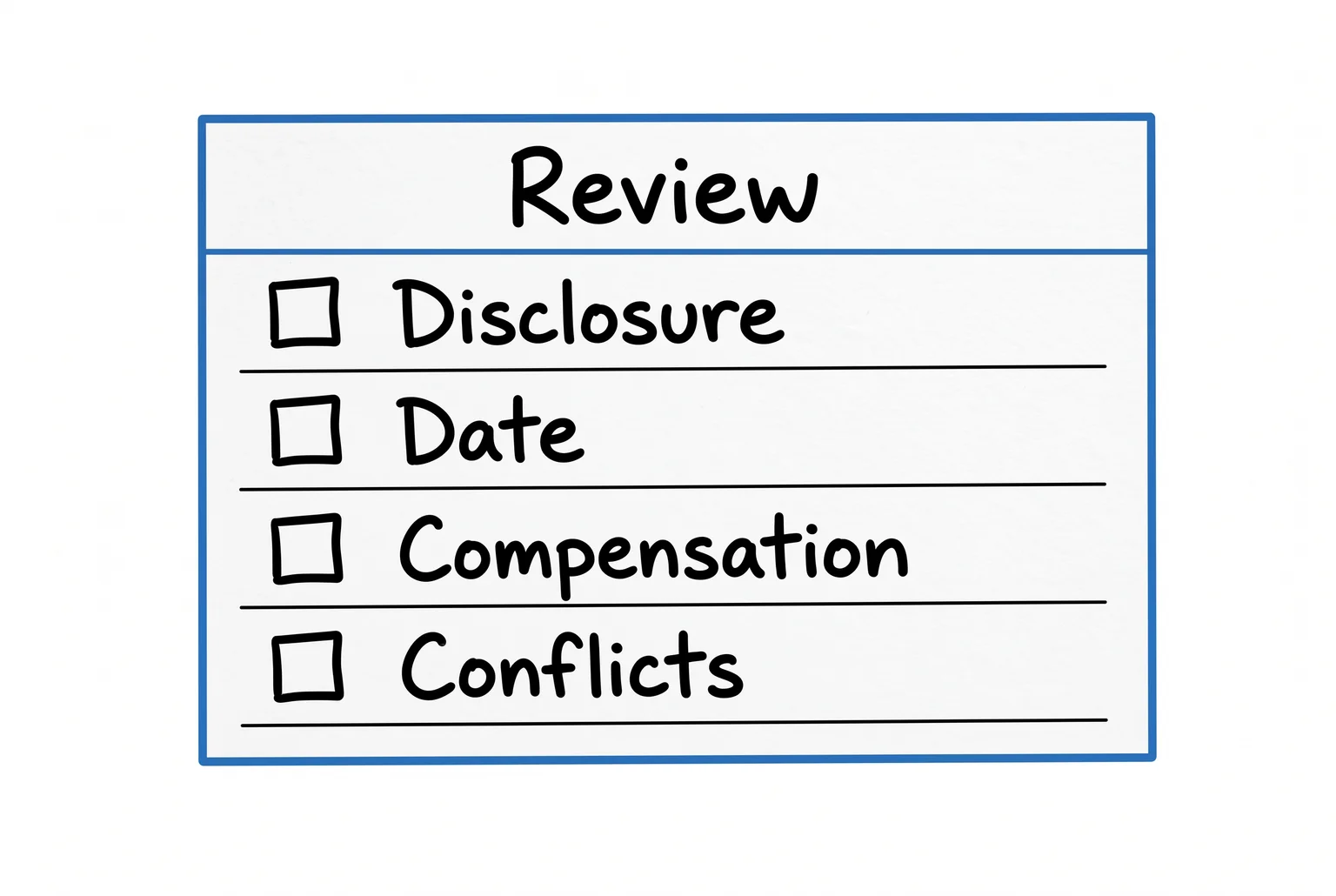
A practical review treats each asset, not each campaign, as the compliance unit: every testimonial, rating badge, and results-adjacent claim gets checked individually before publishing, since disclosure requirements attach to the specific communication, not a one-time policy statement.
Common questions advisors ask before starting
How long until this produces leads? Early movement, like impressions and long-tail keyword rankings, often shows up within 3 to 6 months, with more consistent lead flow developing over a 3 to 9 month window. Meaningful compounding typically takes 12 to 18 months of sustained publishing. There's no fixed timeline, and results vary by market, niche, and consistency.
How much time does this take from me? Many practices need heavier involvement during a launch phase, sometimes 8 to 12 hours per week for the first 6 to 8 weeks, tapering to 4 to 6 hours weekly for ongoing content review and approval.
Isn't this slower than referrals or ads? Often, yes, at first. Referrals may produce a lead within a few weeks, and paid ads can too, but both require continued relationship activity or ongoing spend. Inbound content keeps working after publication without added cost per lead.
What compliance risk does this add? None beyond what's already outlined for testimonials, ratings, and performance claims. The same disclosure requirements apply regardless of channel or how the traffic arrived.
What a working pipeline looks like a year from now
A conversion-ready website, targeted SEO, a steady blog, lead magnets, nurture emails, and organic social don't work as separate tactics. Together, they form one system: content that keeps ranking, capturing, and nurturing prospects long after it's published, without a recurring ad bill or another awkward ask for referrals.
Building it takes real setup work, and it's not the right fit for every practice or timeline. If you're weighing whether to build this in-house, hire it out piece by piece, or hand the whole system to a team that specializes in advisor marketing, a short conversation can help clarify the path, no commitment required. Pro Financial Design offers a free review of where your current site and content stand, and what a realistic buildout could look like for your practice.

ABOUT THE AUTHOR
Cullen Fischel is the lead designer at Pro Financial Design. So, if you’ve ever worked with us, you’ve worked with Cullen on strategy, design, and content creation for your project. Cullen’s got years of experience developing websites, brands, logos, lead magnets, digital marketing strategies, and social and email content for his clients. If you have any questions for him, just send us a message!
Contents

Want more financial advisor marketing tips and guides? Check out: