The Ruthless Marketing Priority List for Time-Strapped Financial Advisors
Short on time? Rank marketing tactics by leverage, focus on the 3 moves that drive advisor leads this quarter, and drop the busywork that doesn't convert.
Updated: 10/20/2026 by Cullen Fischel
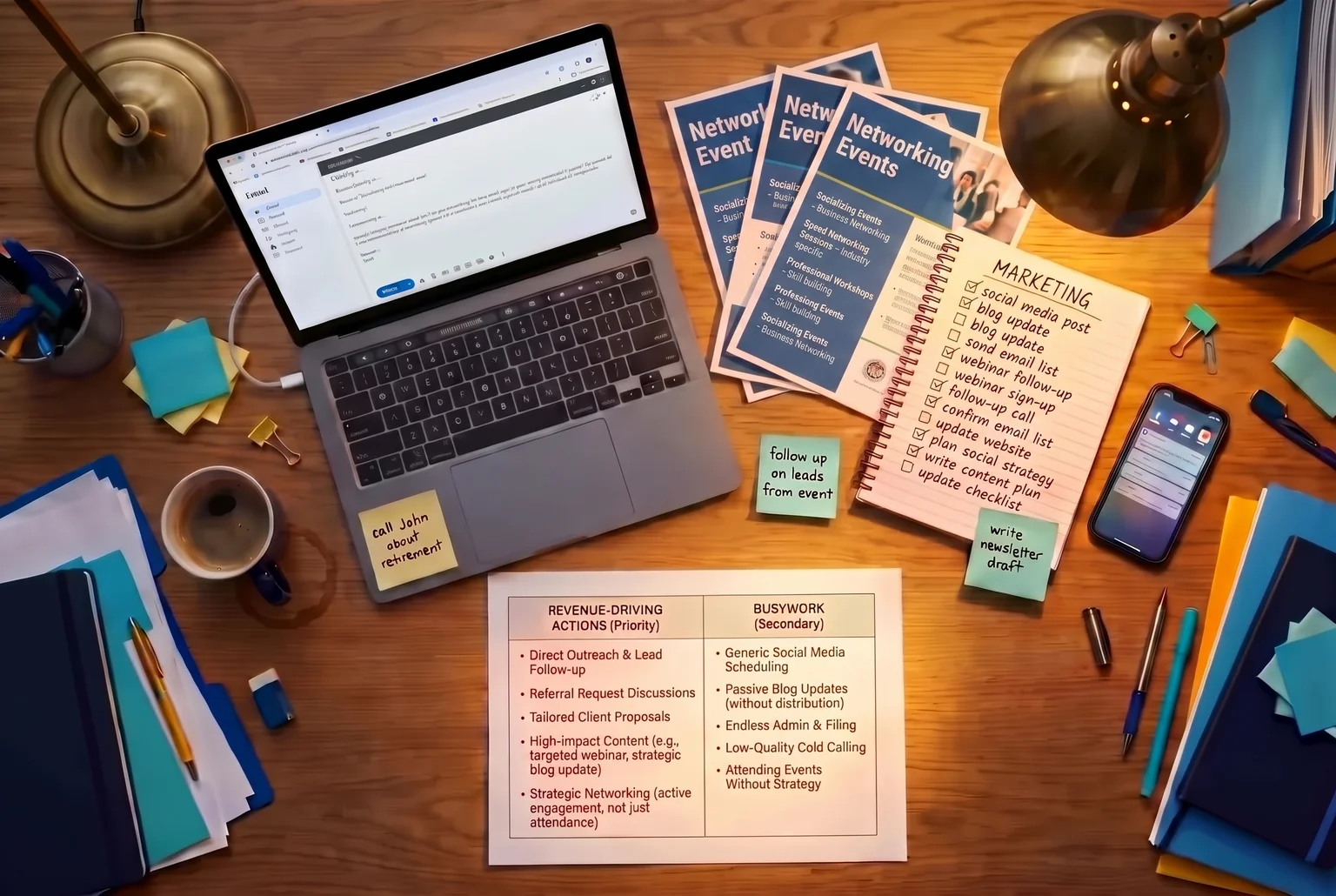
Too many marketing tasks, not enough marketing hours
Lead advisors spend roughly nine hours a week on new-client acquisition, with about five of those hours going to marketing and related business development, according to Kitces Research. That's not much room for social posts, email campaigns, networking events, blog writing, and website updates all at once. Only 20% of advisors report having a defined marketing strategy, per Broadridge's 2023 survey, and 99% still call their marketing activities challenging.
The fix isn't doing more. It's doing less, better. This piece ranks marketing tactics by leverage, meaning the potential lead impact per hour invested, so you can see which 1 to 3 moves deserve your time this quarter and which ones you can cut without losing anything real.
Key points before we rank anything:
- Busy is not the same as effective. Advisors with a defined strategy report higher inbound activity than those without one.
- Most marketing plans fail from inconsistent content and a missing conversion path, not from a shortage of ideas.
- The rest of this guide follows a strict order: highest-leverage tactics first, lower-leverage busywork last, then a filter for judging anything new that comes along.
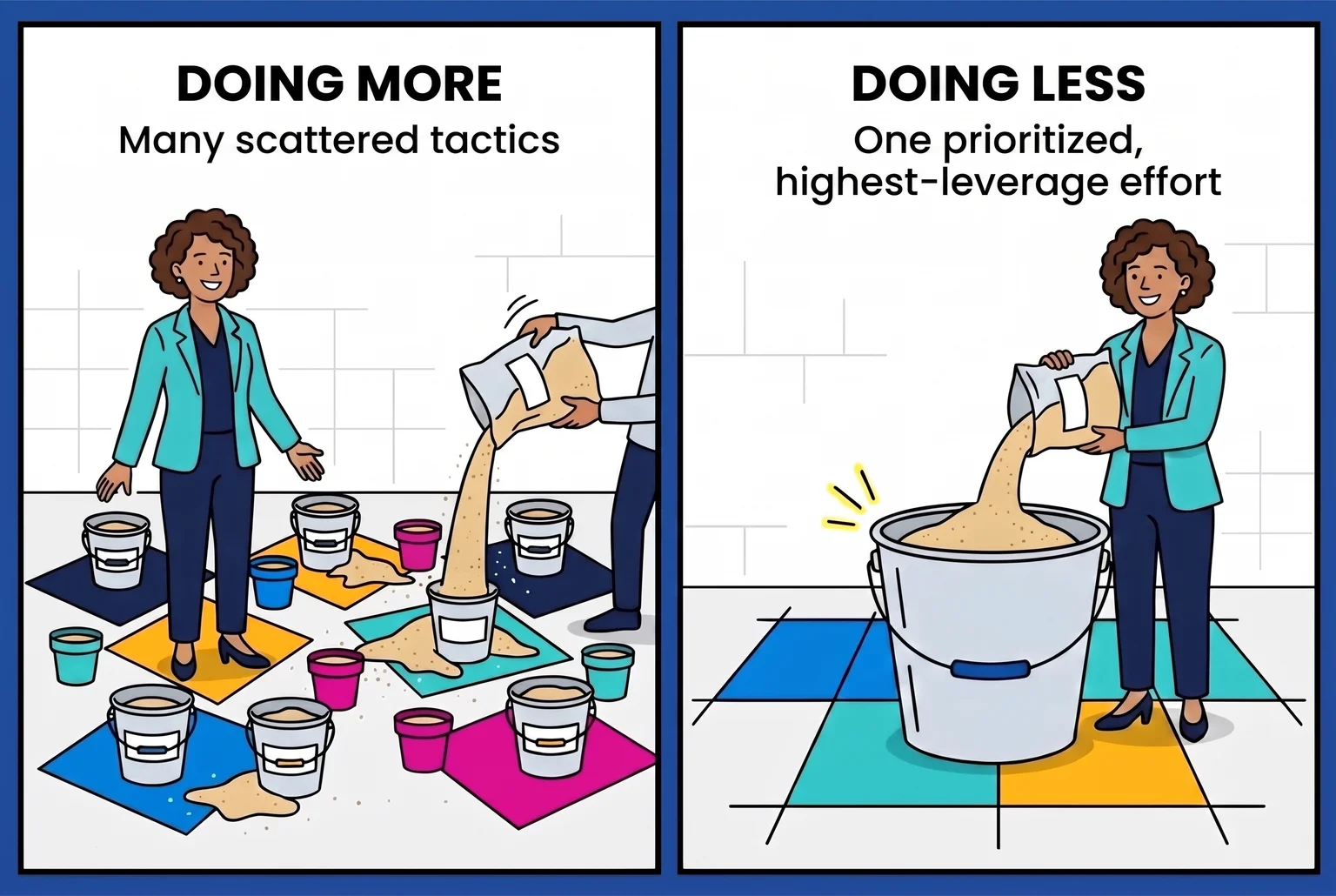
Two questions decide whether a tactic earns your time
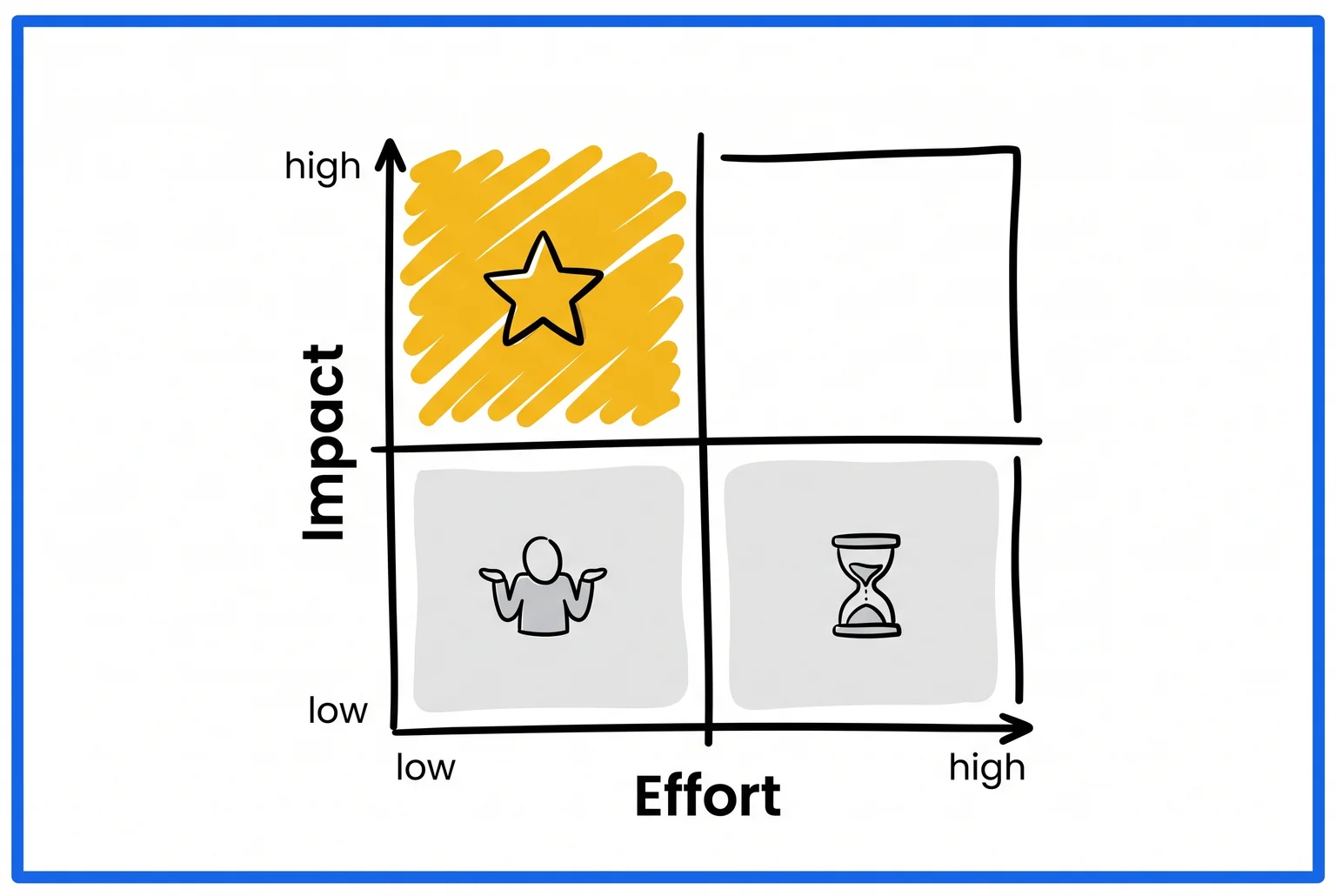
Before ranking anything, apply a simple test drawn from the impact-effort matrix, a tool marketers use to sort initiatives by expected payoff against the time and resources they cost. Ask two questions about any marketing activity: how much could this plausibly move revenue, qualified leads, retention, or booked appointments, and how much time, money, coordination, and ongoing upkeep does it demand?
Plot the answers on a simple grid. High impact, low effort sits in the priority quadrant. High impact, high effort is worth doing but needs to be scheduled deliberately, not squeezed into a Tuesday afternoon. Low impact, high effort is what one framework calls a time trap: activity that feels productive but rarely shows up in the pipeline. Low impact, low effort is filler, harmless but not worth defending when time is scarce.
One more filter sharpens the ranking: does the tactic create something reusable, or does it reset to zero once the campaign ends? A blog post answering a common client question keeps generating visibility for years. A one-off seasonal email blast produces a short spike and then vanishes. Tactics that build reusable assets compound; tactics that don't have to be repeated from scratch every quarter.
With that grid in mind, the next section names the specific moves that land in the priority quadrant this quarter.
The three moves that land in the priority quadrant
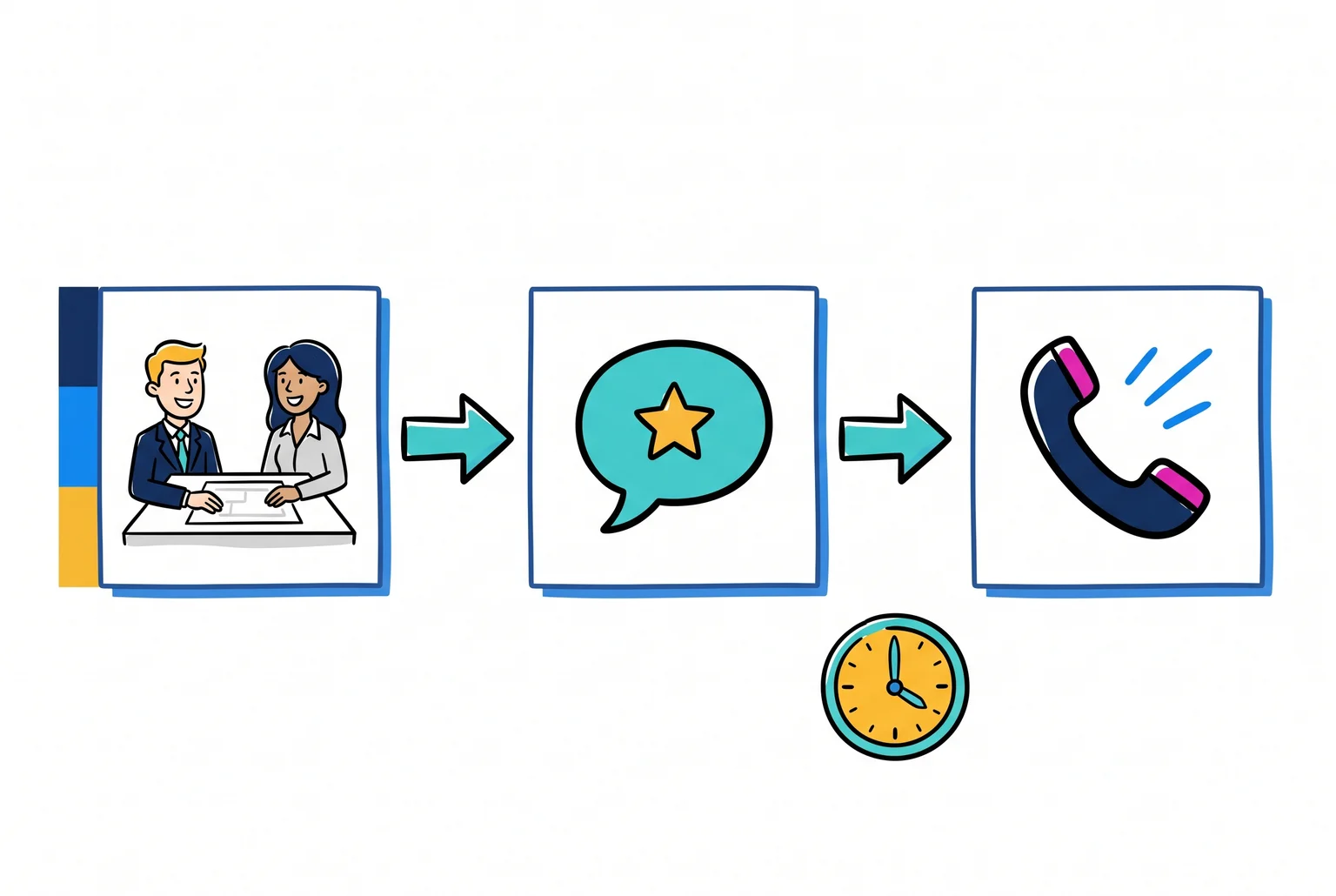
#1: A structured referral system. Referrals already sit high on the impact axis: 93% of advisors report gaining at least one new client from a referral in the prior year, according to Kitces research on cost-efficient marketing. The effort cost is low because it uses relationships that already exist, no audience-building required. Where advisors waste the leverage is follow-through: Kitces also reports that 25 to 35% of clients would give a referral if asked, but advisors only convert 3 to 5% of referred prospects into actual meetings. That gap is a workflow problem, not a marketing problem. Fixing it means building a repeatable ask (tied to a specific trigger, like a plan review or a milestone) and a fast follow-up process, not asking harder.
#2: One pillar content asset, repurposed everywhere. Pick one format you can sustain, a monthly video, a webinar recording, a long client letter, and treat it as raw material rather than a finished product. Kitces' content marketing research describes turning a single asset into blog posts, email content, social clips, and podcast audio. This is high leverage because the time cost is paid once. Reports on repurposing workflows suggest creation time can drop 60 to 80% compared to building separate assets from scratch, and repurposed content is linked to 25 to 35% higher engagement than one-off posts. Those figures come from vendor and industry reports rather than controlled studies, so treat them as directional, not guaranteed. The mechanism still holds: one recorded conversation becomes five weeks of material instead of five separate projects.
#3: Segmented email nurture. A 2024 Demand Gen Report survey found 42% of practitioners saw more than 20% better performance from nurtured leads versus non-nurtured ones. That data is B2B-wide, not advisor-specific, but the logic transfers: a short sequence tied to your pillar content, sent to a defined list, costs little ongoing time once it's built and keeps warm prospects moving without new work each week.
Everything else this quarter gets measured against these three, not added alongside them.
What drops to the bottom of the grid
Run the same impact-versus-effort test on the tactics advisors default to, and several fall into the low-leverage corner not because they're outdated, but because the mechanics don't scale or don't connect to a follow-up system.
- Generic networking events and mixers. Attendees at trade-show-style networking events follow up with only about 20 to 30% of the contacts they make, according to a study published in the Journal of Financial Services Marketing. The event itself takes hours; the leak happens afterward, when there's no system to capture and nurture the names collected.
- Shared or purchased lead lists. Advisors commonly pay $200 to $300 per shared lead with close rates below 2%, per Compound Scale's analysis of advisor acquisition costs. High cost, low effort to buy, terrible conversion. That's a leverage failure on the impact side.
- Sporadic social posting. Posting without a lead magnet, nurture sequence, or booking link attached is activity with no capture mechanism. It can build some awareness, but it doesn't move a name into a pipeline.
- One-off seminars with no follow-up process. The seminar isn't the problem. Running one without a defined capture and nurture step behind it is, since the leads generated have nowhere to go afterward.
- Treating referrals as a strategy instead of a system. 93% of practices rely on client referrals, yet the tactic is widely flagged as inefficient and time-intensive at scale because it depends on informal timing rather than a repeatable trigger.
None of these are "bad" marketing. They're marketing with no leverage attached.
A four-question filter for anything new that lands on your desk
Every quarter, a new tactic will show up: a podcast invite, a webinar platform, a "guaranteed lead" pitch. Run it through the same leverage lens before it eats a single hour.
Pro tip: the quarterly gut-check
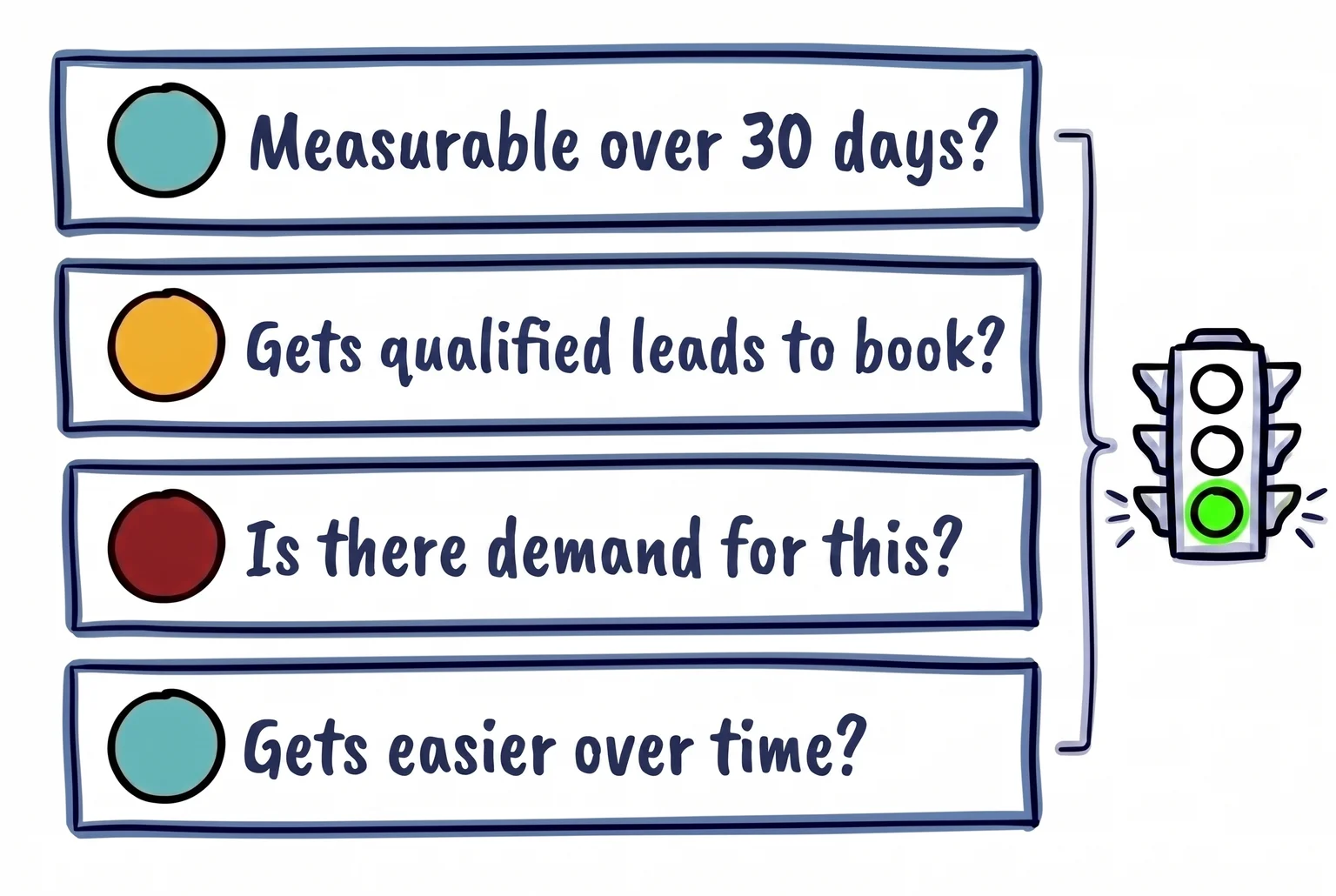
- Can I test this in about 30 days with a defined way to know if it worked? Ideas that resist quick, low-cost testing rarely earn a full quarter of your time.
- Does it serve my actual goal (qualified leads), or does it just generate awareness with no path to a booked meeting?
- Is there already evidence of demand for this, or would I be the guinea pig?
- If it works, does it keep working with less effort next quarter, or does it reset to zero every time?
Score each idea green, yellow, or red on these four. Anything with two or more reds goes on the drop list, no matter how compelling the pitch sounded.
The limits of ranking everything by leverage
This filter deliberately starves some tactics that could still pay off. A conference booth, a guest podcast appearance, a slow-drip networking relationship: none score high on the leverage lens, but they may build trust and referral pipelines that show up two years from now. Dropping them isn't free. It's a trade-off, made on purpose, because the quarter only has so many hours.
Content marketing, the tactic most likely to sit in your priority tier, also won't produce fast results. Programs typically show early signals in 3 to 6 months and steady, attributable leads in 6 to 12. If your quarter starts today expecting a full pipeline by next quarter, adjust the expectation, not the plan.
Referrals move faster since they use trust that's already built, roughly 400% more likely to convert than other sources. Consistency, not intensity, is what determines whether either approach compounds.
When you know the priority but can't execute it consistently
Knowing that content and referral follow-through sit in your priority tier doesn't make the writing, sending, and nurturing happen every week. That's the gap where most advisors' plans quietly stall, not from bad prioritization but from a calendar that has no room left.
This is the point where outsourcing the execution, not the decision-making, starts to make sense. Done-for-you content marketing services can plan, produce, and distribute the same evergreen content and lead-nurture sequences you already identified as high-leverage, then hand you the resulting appointments instead of the busywork behind them. Some also build in the landing pages, automated follow-up, and content calendars that turn a single referral ask or newsletter into a repeatable system rather than a one-off task.
None of this replaces the judgment call on what deserves your time. It just removes the excuse that you don't have enough of it.
If your priority list is clear but your calendar keeps eating the follow-through, it may be worth a short conversation to look at what's actually consuming your marketing hours this quarter.

ABOUT THE AUTHOR
Cullen Fischel is the lead designer at Pro Financial Design. So, if you’ve ever worked with us, you’ve worked with Cullen on strategy, design, and content creation for your project. Cullen’s got years of experience developing websites, brands, logos, lead magnets, digital marketing strategies, and social and email content for his clients. If you have any questions for him, just send us a message!
Contents

Want more financial advisor marketing tips and guides? Check out: