The Marketing Stack: Why Website, Content, and Video Compound Each Other for Financial Advisors
Random tactics rarely build a pipeline. Learn how a website, content, and video work together as one stack, and which to build first as a financial advisor.
Updated: 10/20/2026 by Cullen Fischel
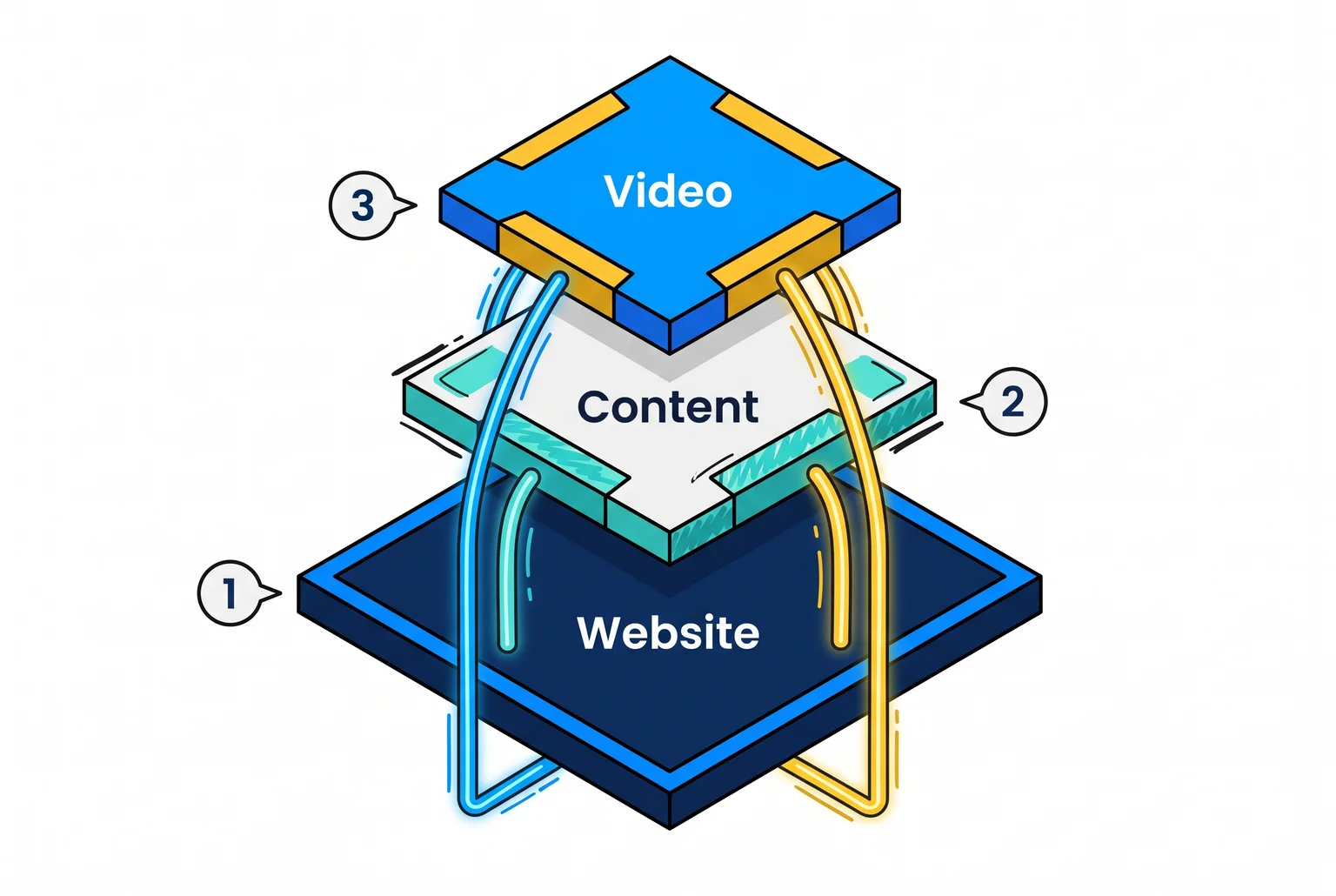
The problem with posting when you feel like it
If your marketing routine looks like a burst of LinkedIn posts in January, silence through March, then a webinar you never follow up on, you're not alone. Inconsistent posting followed by long gaps is one of the most common patterns among advisors trying to market themselves without a system.
The reason it doesn't work has to do with how people actually hire an advisor. A prospect typically moves through a trigger event, research, validation, a conversation, and a final decision, and that process needs support at every stage, not a single well-timed post. Financial decisions are trust-based, and trust takes repeated contact to build. One podcast appearance or one blog post rarely closes that gap.
Piecemeal tactics fail for a second reason: they're disconnected. A lead magnet with no follow-up sequence, a website with no fresh content, a video with no landing page to send viewers to. Each piece exists in isolation, so none of them build on each other.
Key problems with tactic-by-tactic marketing:
- Posting in bursts, then going quiet for weeks, breaks the visibility a prospect needs to keep you top of mind
- One-off promotions or webinars without a nurture path rarely convert initial interest into booked calls
- Disconnected assets (a website, a few social posts, a lead magnet) don't add up to a system a prospect can move through
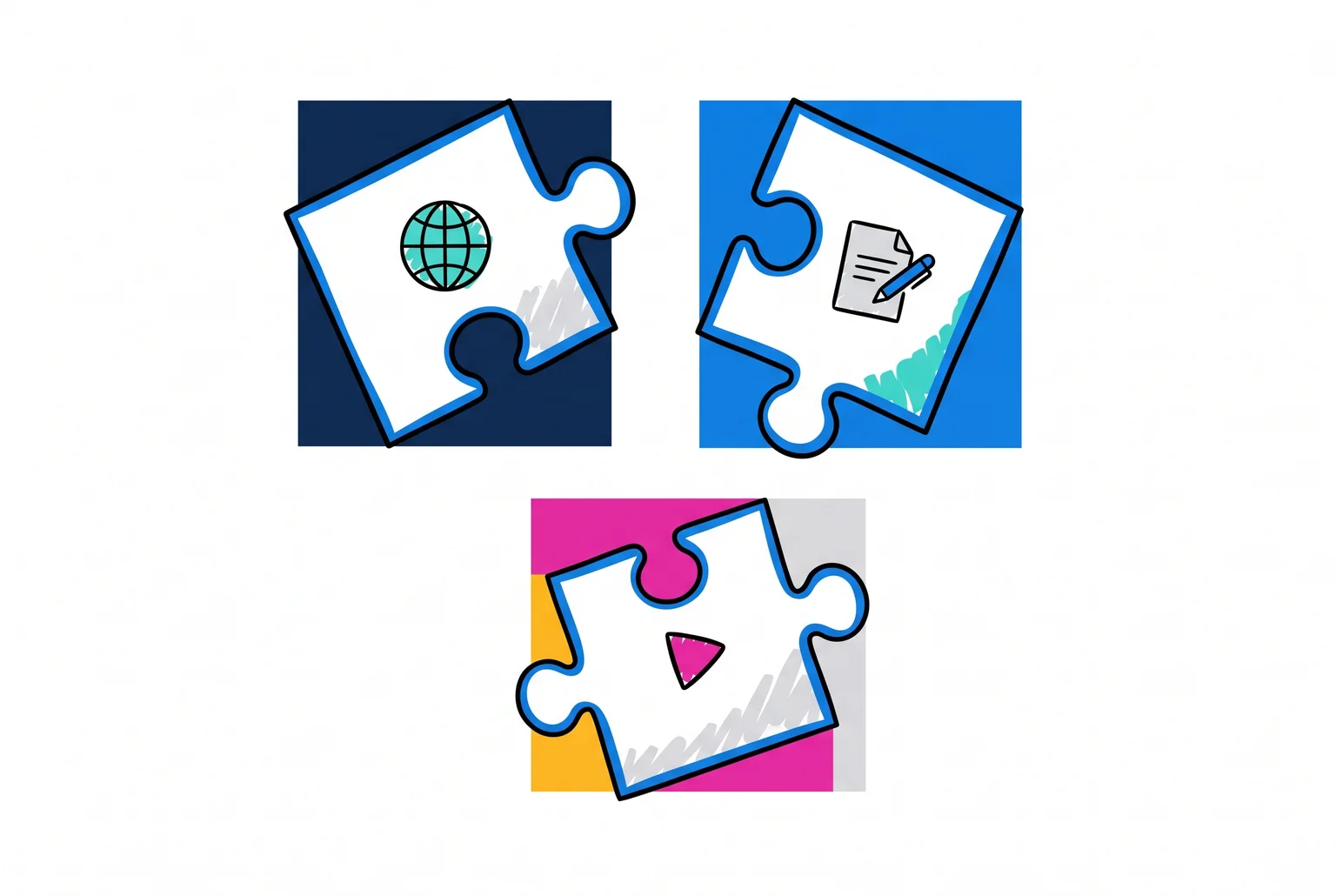
The fix isn't more tactics. It's three coordinated layers, your website, content, and video, working as one system.
What "the stack" actually means
A stack is three marketing layers built to work as one unit, where each layer increases what the other two produce. A website alone captures whoever happens to find it. Content alone builds trust with no place to send readers. Video alone builds visibility with no path to a booked call. Put together, each layer feeds the next: content drives traffic to the website, video extends the reach of the content, and the website converts what both of them generate. The output isn't three separate results added up. It's one result multiplied.
Here's what each layer does on its own.
Website: the conversion layer
The website's job is to turn an interested visitor into a booked call. That means a homepage that states clearly who you serve and what outcome you deliver, a niche statement like "retirement income planning for physicians" instead of generic language about "comprehensive financial solutions," a short explanation of your services, a proof section with credentials or testimonials, and one repeated call to action, usually a "book a call" button connected to a scheduling tool like Calendly. A generic "contact us" form adds friction and costs bookings; an embedded calendar removes it.

Content: the trust-building layer
Content answers the questions a prospect already has before they're ready to talk to you: "How much do I need to retire?" "What's the difference between a financial planner and an advisor?" "How do I create a Medicare enrollment timeline?" Blog posts, checklists, and short explainers do the work of a first conversation without you being in the room. A prospect who reads three of your posts before a call arrives already convinced you understand their situation.
Video: the reach layer
Video, mainly on YouTube, extends your reach to people who will never read a blog post but will watch a five-minute explainer. Its job in the funnel is visibility and authority: a short video on "How to Reduce Taxes on Your Retirement Income" can reach prospects who found you through search rather than referral, then send them to the exact website and content built to convert them.
What one recorded session can produce
Take a single 45 to 60 minute webinar on a topic like retirement income planning for high earners. Recorded once, it becomes raw material for weeks of output. The recording becomes a blog post published on the website, with the replay embedded and links to relevant service pages. The transcript gets mined for themes and turned into five to seven LinkedIn posts, each built around one argument or data point from the session, each one linking back to that blog post. Short clips, pulled from the moments where you answer a specific question, go out on social with captions and a link to the landing page, which several sources point to as one of the higher-return pieces you can pull from a webinar. A recap email goes to your list with the top takeaways and a link to watch the full replay.
None of these assets work by themselves. The LinkedIn post earns attention but has nowhere to send someone except the website. The blog post ranks in search but needs the video to hold attention once someone arrives. The email reconnects with someone who registered but didn't watch, and routes them to the landing page that's built to convert. The website is the one place all of it points to, and the one place with a calendar link waiting when they get there.
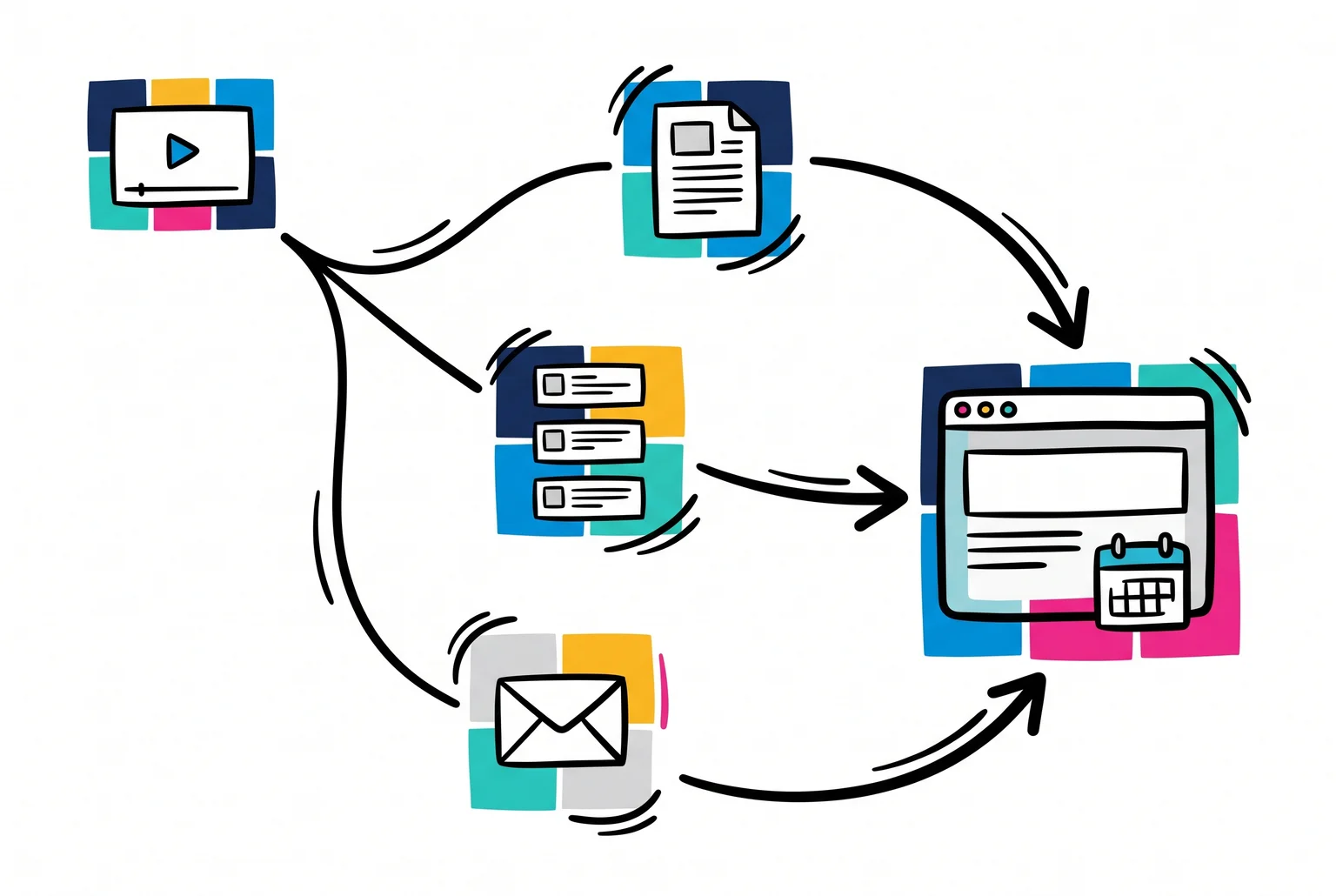
This is why the sequence in the previous section compounds instead of just adding up. A blog post published without a video has less to link to. A video posted without a website has nowhere to send the traffic it earns. An email sent without content to reference has nothing to recap. Each layer gives the others something to point to and something to point from. Skip one, and the other two have to work harder to do a job that isn't fully theirs.
What to build first, second, and third
Build the website first. Before writing a blog post or booking a video shoot, get the site in place with clear positioning, a defined ideal client, service pages, and a working calendar link. This is the foundation everything else has to sit on, and it needs conversion tracking and basic SEO from day one so you can tell what's actually working.
Once the site is live and converting, add content and email. Two focused blog posts a month, paired with an email sequence that routes readers back to specific service pages, is enough to start. The goal here isn't volume. It's building a small library of topics your ideal clients actually search for, each one reinforcing what your website already claims about who you serve.
Video comes last, and it's built from what you already know works. By this point you've seen which topics get read, which emails get clicked, which questions prospects keep asking on calls. Turn those into video. A short explainer on the blog post that got the most traffic, a webinar on the topic that filled your calendar last quarter. Video made before you know what your audience responds to is a guess. Video made after is a repeat of something already proven.
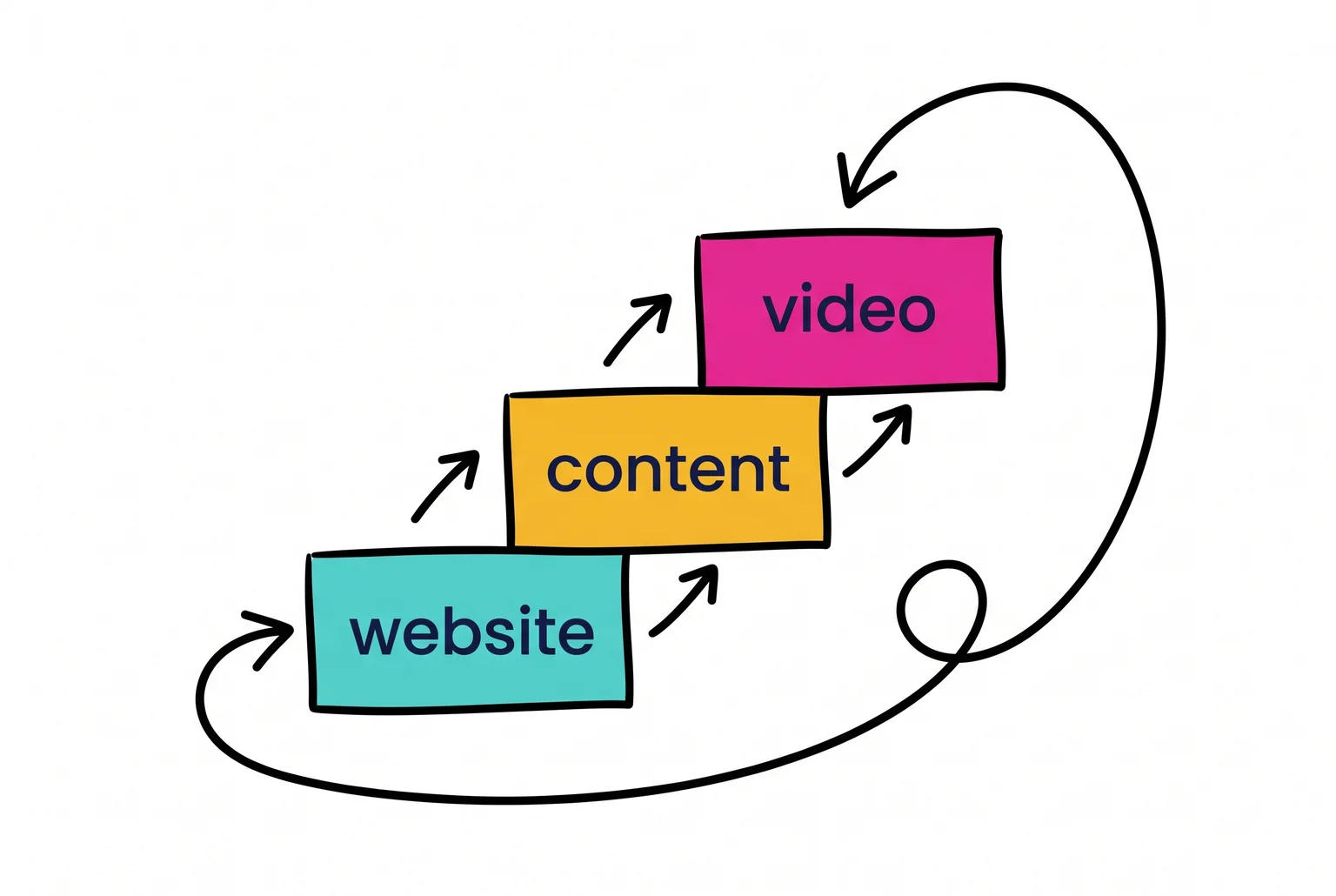
Common mistakes when the order gets skipped. Advisors who start with video often end up with polished clips and no landing page for viewers to reach, so attention gets earned and then wasted. Advisors who start with content before the website is ready end up publishing to a page that doesn't convert, which limits reach to whoever happens to already be in their inbox. Advisors who post once and move on, without a plan to repurpose that piece across email and social, get a one-time bump and flat results despite the work involved.
Pace matters less than order. Some firms will get through all three stages in a few months, others will take longer depending on budget and how much can be delegated versus done in-house. The order is the part worth protecting.
Where to start this week
The stack works in one order: website first for a place to convert, content next to build a library of proof, video last to turn what already works into a format that builds trust faster. Skip a step and the ones after it lose most of their return.
On timing, expect this to unfold in months, not days. Google's own guidance suggests waiting several weeks just to see initial movement from site or content changes, and Ahrefs points to 3 to 6 months as a common range for measurable SEO traction. A reasonable planning horizon: early signals (indexing, impressions, returning visitors) within the first few months, real traction around month 3 to 6, and a more dependable, compounding channel by month 6 to 12 if you keep publishing and keep the conversion path intact. Referrals, an existing audience, or a tightly defined niche can shorten that. There's no version of this that works in two weeks.
On DIY versus done-for-you: either can work if the sequence is respected. What usually breaks DIY efforts isn't lack of skill, it's lack of time to keep the layers moving in order while running an advisory practice.
If you're not sure which stage you're actually in, that's the more useful question than which tactic to try next. A short review of your current site, content, and video against this sequence will tell you which layer to build first and which ones are already wasted effort until the foundation catches up.

ABOUT THE AUTHOR
Cullen Fischel is the lead designer at Pro Financial Design. So, if you’ve ever worked with us, you’ve worked with Cullen on strategy, design, and content creation for your project. Cullen’s got years of experience developing websites, brands, logos, lead magnets, digital marketing strategies, and social and email content for his clients. If you have any questions for him, just send us a message!
Contents

Want more financial advisor marketing tips and guides? Check out: