The 90-Day Financial Advisor Marketing Plan That Actually Gets Finished
Follow a 90-day financial advisor marketing plan built for solo advisors and small teams: foundation, LinkedIn and email, referrals, and compliance flags.
Updated: 10/20/2026 by Cullen Fischel
Two ways advisor marketing plans fail, and a third path that works
Most advisor marketing advice fails in one of two directions. Either it's so generic it's useless ("post consistently," "build your brand"), or it's a 20-tactic checklist that requires a marketing department to execute. Neither survives contact with a real practice. A Broadridge study found only 23% of advisors have a defined marketing strategy at all, and 91% say developing one is a challenge in the first place.
Key patterns behind failed plans:
- No clear niche or value proposition, so campaigns speak to everyone and land with no one
- Disconnected activities (a LinkedIn post here, an email blast there) with no unifying message
- Too many tools and tactics adopted at once, then abandoned when tracking gets messy
- Inconsistent execution driven by lack of time, not lack of ideas
AltaStreet's research on advisor marketing plans points to unclear positioning as a root cause of underperformance, while Midstream Marketing describes the more common failure mode: advisors doing things, just not doing them in a way that adds up to anything.

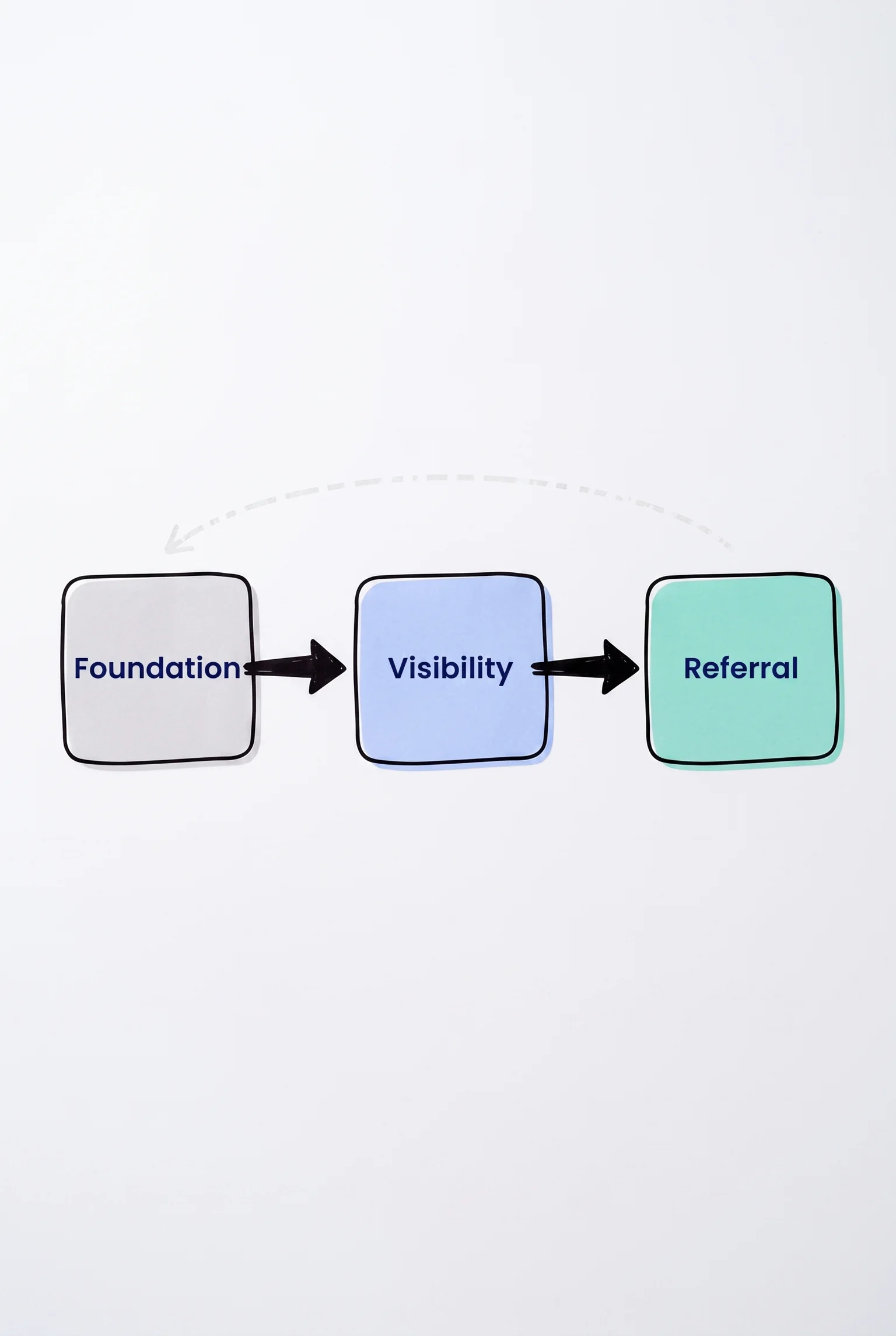
The fix isn't more tactics. It's sequencing the few that matter so each one builds on the last, in an order a solo advisor or a two-person team can actually keep up with. That's the logic behind a 90-day system: foundation first, then visibility, then referral and conversion. Each phase takes roughly four weeks, uses tools most advisors already have access to, and assumes you're doing this alongside client work, not instead of it. If you have an assistant or a virtual assistant, some of this delegates cleanly. If you're solo, the plan is built to still fit inside a normal week, including the 86% of advisors who say time, not ideas, is the real constraint.
The three phases, and why the order matters
Each phase runs roughly four weeks. Skipping ahead is the most common way this kind of plan collapses, so the order isn't optional.
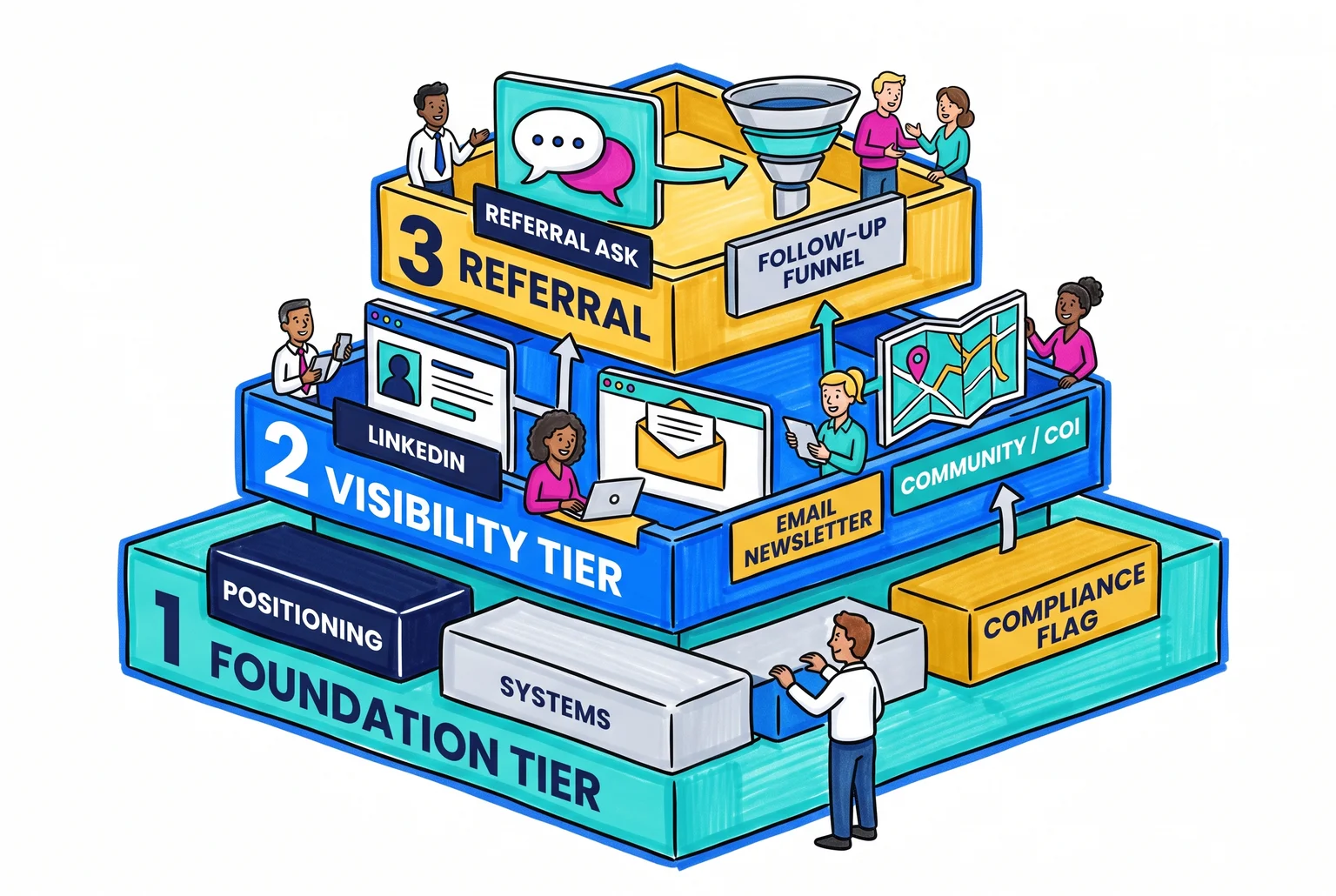
- Phase 1: Foundation (Days 1-30). Clarify who you serve and what makes you different, audit what you already have (website, email list, current content), and set up the systems that everything else depends on: a CRM, a basic email platform, a simple content calendar. This is also when you flag anything customer-facing for a compliance review before it goes public.
- Phase 2: Visibility and content (Days 31-60). Start publishing on a schedule: LinkedIn posts, an email newsletter, and one community-based visibility play, whether that's a center-of-influence relationship, a local networking group, or a niche online community. This is also the phase where many advisors introduce their first seminar or webinar, since the foundation work from Phase 1 gives it a clear audience and topic.
- Phase 3: Referral and conversion (Days 61-90). Turn the attention you built into conversations. This means a structured referral ask, a follow-up process for leads who engaged in Phase 2 but haven't booked a call, and a tightening of whatever isn't converting.
This sequence mirrors how buyers actually move, from awareness to comparison to a decision, so trying to run a referral campaign before you've built any visibility is asking prospects to trust you before they've heard of you. The reverse mistake happens too: advisors who post content indefinitely without ever building a referral system, so visibility never turns into pipeline.
Some advisors run this as a one-time 90-day push. Others treat it as a repeatable quarterly cycle, refining the same phases each time with sharper positioning and better data. Either way, the sequence stays the same. What changes in later cycles is how much of each phase can run on autopilot.
Weeks 1-4: Positioning, systems, and the audit before anything goes public
The first month has no visible output. No posts, no emails, nothing a client will see. That's by design: everything you publish in Phase 2 depends on decisions made here.
Week 1: Positioning. Write one sentence that names your audience, the outcome you deliver, and your method. A useful structure: who you serve, what you do, how you deliver it, and why it matters, a framework BlackRock uses in its work with high-net-worth-focused advisors. Examples worth adapting: "I help physicians aged 55-70 achieve tax-efficient retirement income through coordinated Social Security and Roth conversion strategies so they retire on their timeline without IRS surprises," or a narrower version like "I help Texas public school employees retiring by 2032 coordinate pension timing with Social Security to maximize guaranteed lifetime income." Vague statements like "I help people plan for retirement" don't give a prospect or referral source anything to repeat back to a friend.
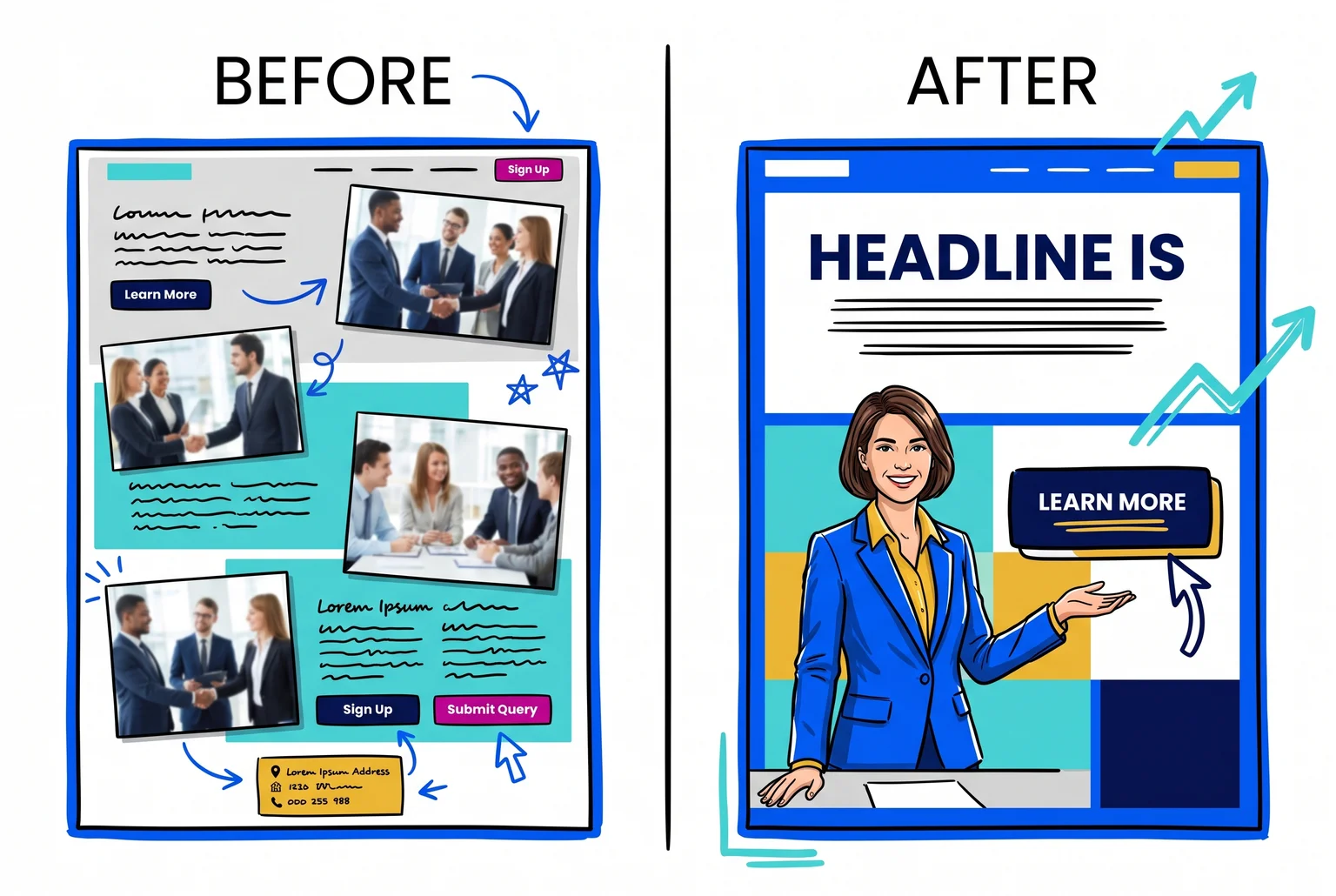
Week 2: Audit. Pull up your website, LinkedIn profile, and any old email lists. Check whether the homepage states your audience and differentiation within the first few seconds of reading, whether calls to action and contact forms actually work, and whether old bios or testimonials still reflect who you serve now.
Week 3: Systems. Set up a CRM built for advisors rather than a generic sales tool. Wealthbox and Redtail are commonly recommended starting points for solo practices and small RIAs because of their lower setup burden and stronger fit for recordkeeping. Pricing for advisor CRMs typically runs from around $39 to $99 per user per month. Alongside the CRM, set up a basic email platform and a simple content calendar, a spreadsheet is fine at this stage.
Week 4: Compliance flag and launch prep. Before any client-facing copy, testimonial, or bio goes live, flag it for a compliance review appropriate to your firm's registration status. This isn't a substitute for advice from your compliance officer or counsel, it's a reminder that website disclosures, testimonial language, and performance claims deserve a second look before publishing, not after.
Delegate vs. own: A VA or assistant can audit your website and LinkedIn profile against a checklist, research CRM options, and build the content calendar template. You need to own the positioning statement and the final call on any client-facing language, since no one else can decide who you serve or approve what goes out under your name.
Weeks 5-8: Putting your positioning to work in public
With the foundation set, Month 2 puts three channels running at the same time: LinkedIn, email, and one relationship-based visibility play. None of these need to be full-time work. Together they should take three to five hours a week once the routines are in place.
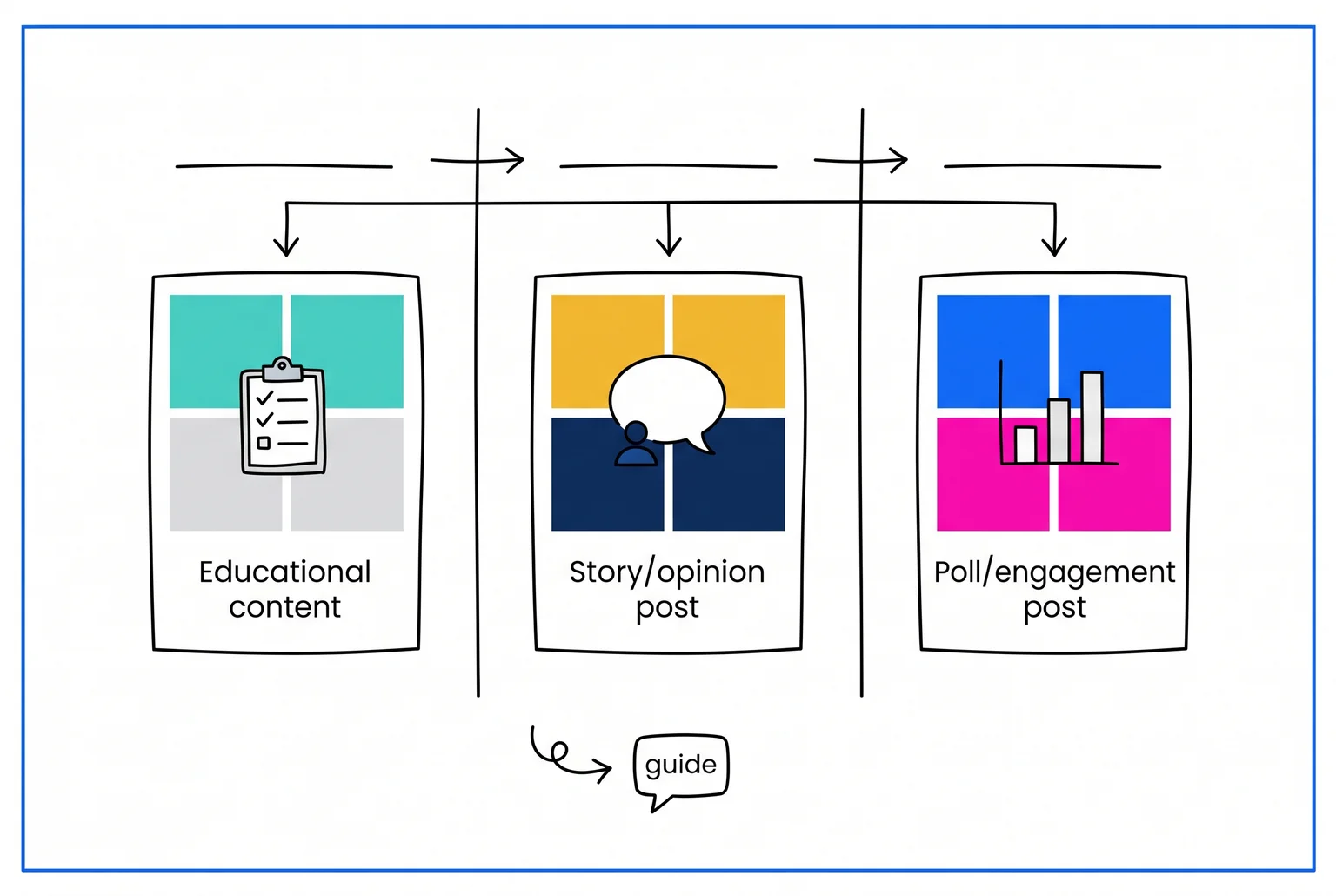
Week 5: LinkedIn setup and first posts. Commit to two to three posts per week, a cadence research on advisor LinkedIn activity describes as more effective than daily posting for this audience. Use a repeatable mix: one educational post built around your niche (a checklist, a framework, a common mistake), one story or opinion post drawn from anonymized client situations, and one engagement post, such as a poll on a retirement planning concern. Include a soft call to action, like inviting readers to comment "guide" for a resource.
Week 6: Email nurture cadence. Start sending to your list on a fixed day and cadence, weekly or biweekly is standard for advisors running active practices, with monthly as a fallback if that pace isn't sustainable. Each email should include one useful idea and a single, low-pressure CTA, such as replying with a question or booking a short call.
Week 7: Niche visibility play. Pick one COI or community channel and go deeper rather than spreading thin. If you work with CPAs serving local business owners, that might mean reaching out to two or three accountants to explore live casework on shared clients, a tactic tied to higher referability among advisor firms. If your niche is more consumer-facing, a local Facebook group or a niche online community for your target profession can work similarly.
Week 8: Review and adjust. Look at which LinkedIn posts got engagement, whether email opens held steady, and whether your COI outreach led to a real conversation. Drop or adjust what isn't landing before Month 3 builds on it.
Delegate vs. own: A VA can format and schedule LinkedIn posts, build email templates, and draft a first-pass newsletter from your notes or a past client conversation. You should write or closely edit the final copy, approve anything going out under your name, and personally handle COI conversations and relationship-building, since those depend on your judgment and voice.
Compliance flag: Public content, including LinkedIn posts and newsletters, often needs to be retained and, depending on your firm's structure, reviewed before or after publishing. This is a general consideration to raise with your compliance contact, not a substitute for their review.
Weeks 9-12: Closing the loop on two months of work
Month 3 doesn't launch anything new. It converts the attention Months 1 and 2 built and makes sure no lead from your email list, LinkedIn engagement, or COI conversations sits unanswered.
Week 9: Build the referral ask into your existing meetings. Rather than a separate campaign, add a referral moment to review meetings, plan deliveries, and any conversation where a client expresses satisfaction. Practice-management research points to these as the highest-trust moments to ask. A workable script: "Who in your family or circle would benefit from hearing how we helped you achieve [specific result]?" Place this on your agenda after presenting results, before wrapping up. Skip the ask during downturns, bad news, or rushed meetings.
Week 10: Systematize the 7-10 day follow-up. If a client doesn't refer someone on the spot, a short note 7 to 10 days after the meeting, while the value delivered is still fresh, tends to work better than asking cold, according to Aspen's research on advisor referrals. The note can recap the meeting briefly and offer the same help to people in the client's circle.
Week 11: Revive stalled leads from Months 1-2. Pull your CRM list of everyone who opened emails, engaged on LinkedIn, or had a first conversation but never booked. Run them through a short multi-channel sequence, an email, a phone call, then another touch on a different channel, over about three weeks. Aim for phone calls to make up a meaningful share of these touches rather than relying on email alone.

Week 12: Review the quarter and set Month 4 priorities. Look at referral conversations started, leads converted to calls, and which channel produced the most movement. Keep what worked, cut what didn't.
Delegate vs. own: A VA can log referral requests in the CRM, set follow-up reminders, and track where each stalled lead sits in the sequence. You need to personally make every referral ask and handle the conversion conversations that follow, since both depend on trust that only you can carry.
Where testimonials and referrals cross into compliance territory
Client testimonials, LinkedIn endorsements, and referral asks all touch the SEC's Marketing Rule, and the details matter more than most advisors expect.
Compliance flag: This section is general awareness, not legal or compliance advice. Rules vary by firm structure, custodian, and state, and requirements change. Confirm every specific with your compliance officer or securities counsel before publishing testimonials, endorsements, or third-party ratings.
A few areas worth raising with your compliance contact before Month 2 content goes live: the SEC's Marketing Rule permits testimonials and endorsements, but generally requires clear disclosure of the promoter's status, any compensation, and material conflicts of interest. Compensated promoters typically need a written agreement unless they're an affiliate or receive $1,000 or less in the prior 12 months. Third-party ratings have their own disclosure and preparation requirements. On the social media side, FINRA treats static profile content as retail communication subject to recordkeeping, and firms need a documented way to capture and retain business-related posts, not just personal ones.
None of this should stall your content calendar. It should shape how your CRM tags testimonials, how your VA logs client permissions, and what your compliance officer reviews before anything goes public.
Dividing the work between you and your assistant
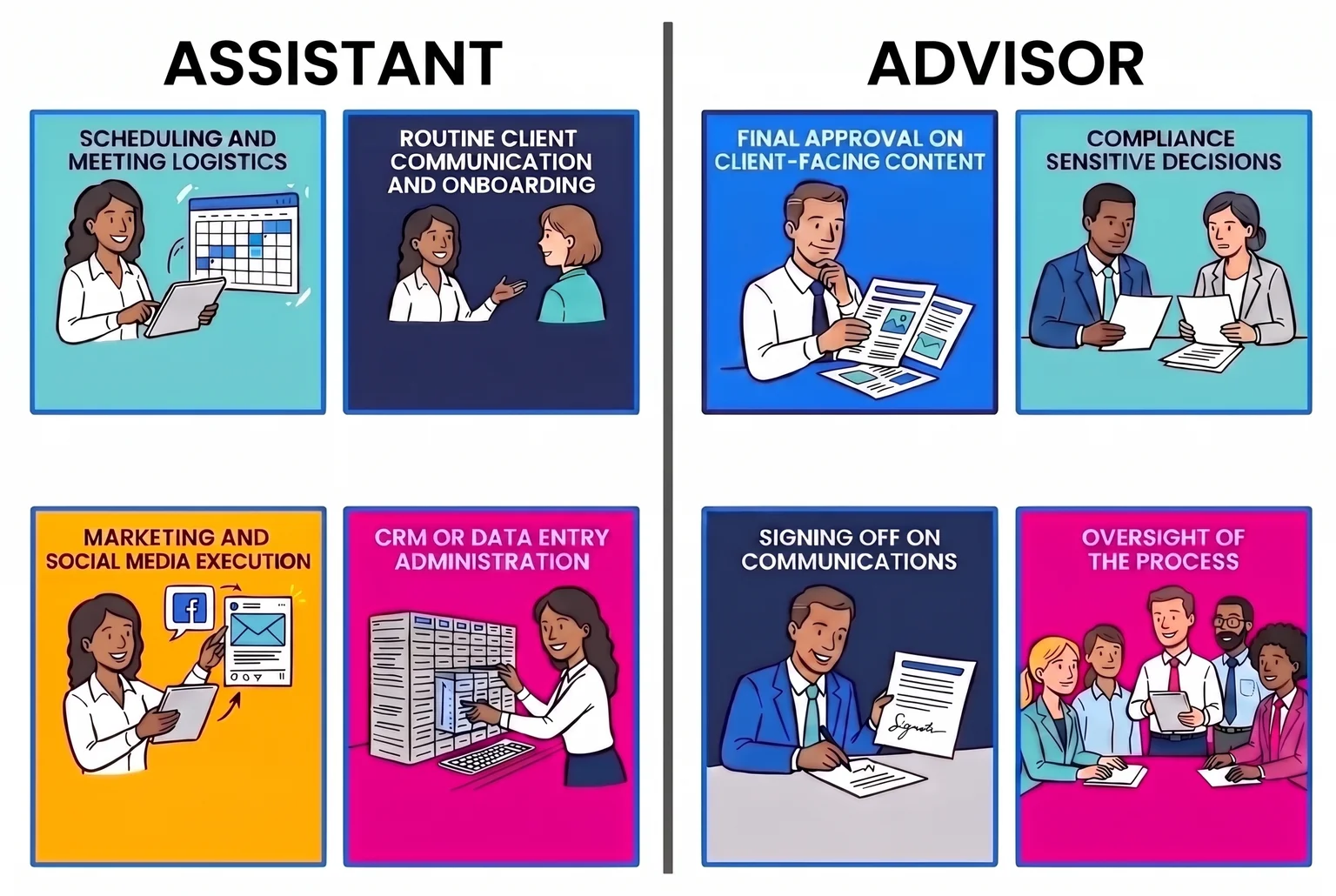
Across all three months, the pattern is the same: an assistant or VA handles logistics and production, while you keep anything that requires client judgment or carries compliance exposure.
Delegate: - Scheduling, calendar coordination, and meeting confirmations - CRM updates, contact records, and tagging testimonials or referral sources - Drafting and scheduling LinkedIn posts and newsletters for your review - Compiling meeting prep materials, account summaries, and agendas - Report formatting, document organization, and billing support - Basic lead research and tracking marketing performance numbers
Keep on your plate: - Final approval on anything published publicly, especially testimonials or endorsements - The actual referral ask and follow-up conversations with prospects - Responses to substantive client questions, as opposed to routine scheduling replies - Reviewing what your VA drafts before it goes out, particularly during Month 2's content push - Relationship-building with COIs or community contacts, since that trust doesn't transfer to a delegate
This isn't about your VA lacking skill. It's about liability and relationship equity sitting with you. A VA can log a testimonial permission in your CRM, but you're the one who confirms it meets your firm's disclosure requirements. A VA can schedule a LinkedIn post, but you're the one who wrote it or signed off on it.
If you don't have an assistant yet, treat this list as a hiring roadmap: start with scheduling and CRM upkeep, then expand into content support once you trust the process.
Common questions before you start
What if I fall behind schedule? Shift the plan rather than abandon it. If Month 1 takes five weeks instead of four, push everything else back. The sequence matters more than the calendar dates.
I have no assistant. Can I still run this? Yes, but pick one channel, not two. Most solo advisors do LinkedIn plus email rather than LinkedIn plus a community play in the same month.
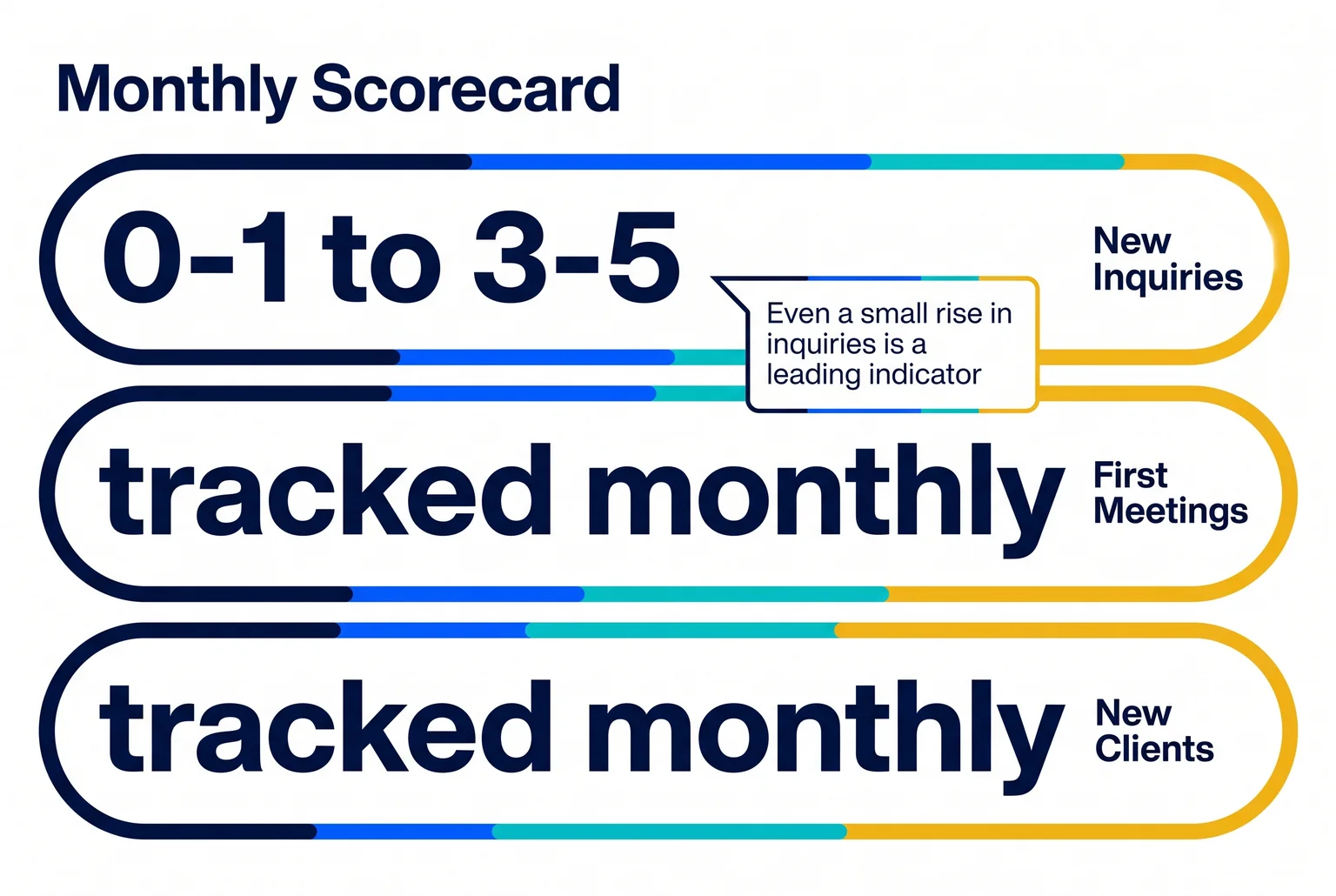
How do I know it's working? Track new inquiries by source and first meetings booked, not website visitors. A jump from zero or one inquiry a month to three or four is a real signal, even before any of them become clients.
What conversion rate should I expect from first meeting to next step? Some sources cite a range in the 25 to 35 percent area, though this figure hasn't been independently verified and shouldn't be treated as a firm target.
What if nothing happens by day 60? Check your message and channel before assuming the system is broken. A stalled inquiry count usually traces back to unclear positioning, not lack of effort.
If you want a second set of eyes on where your plan stands, a marketing plan review call can help you spot what's missing before Month 1 starts.

ABOUT THE AUTHOR
Cullen Fischel is the lead designer at Pro Financial Design. So, if you’ve ever worked with us, you’ve worked with Cullen on strategy, design, and content creation for your project. Cullen’s got years of experience developing websites, brands, logos, lead magnets, digital marketing strategies, and social and email content for his clients. If you have any questions for him, just send us a message!
Contents
Want more financial advisor marketing tips and guides? Check out: