Financial Advisor Lead Generation: Better Prospects Beat More Prospects
Stop wasting hours on unqualified discovery calls. Learn how independent financial advisors use niche positioning and video to attract pre-qualified clients.
Updated: 10/26/2026 by Cullen Fischel

A busy calendar of discovery calls is not the same as a healthy pipeline
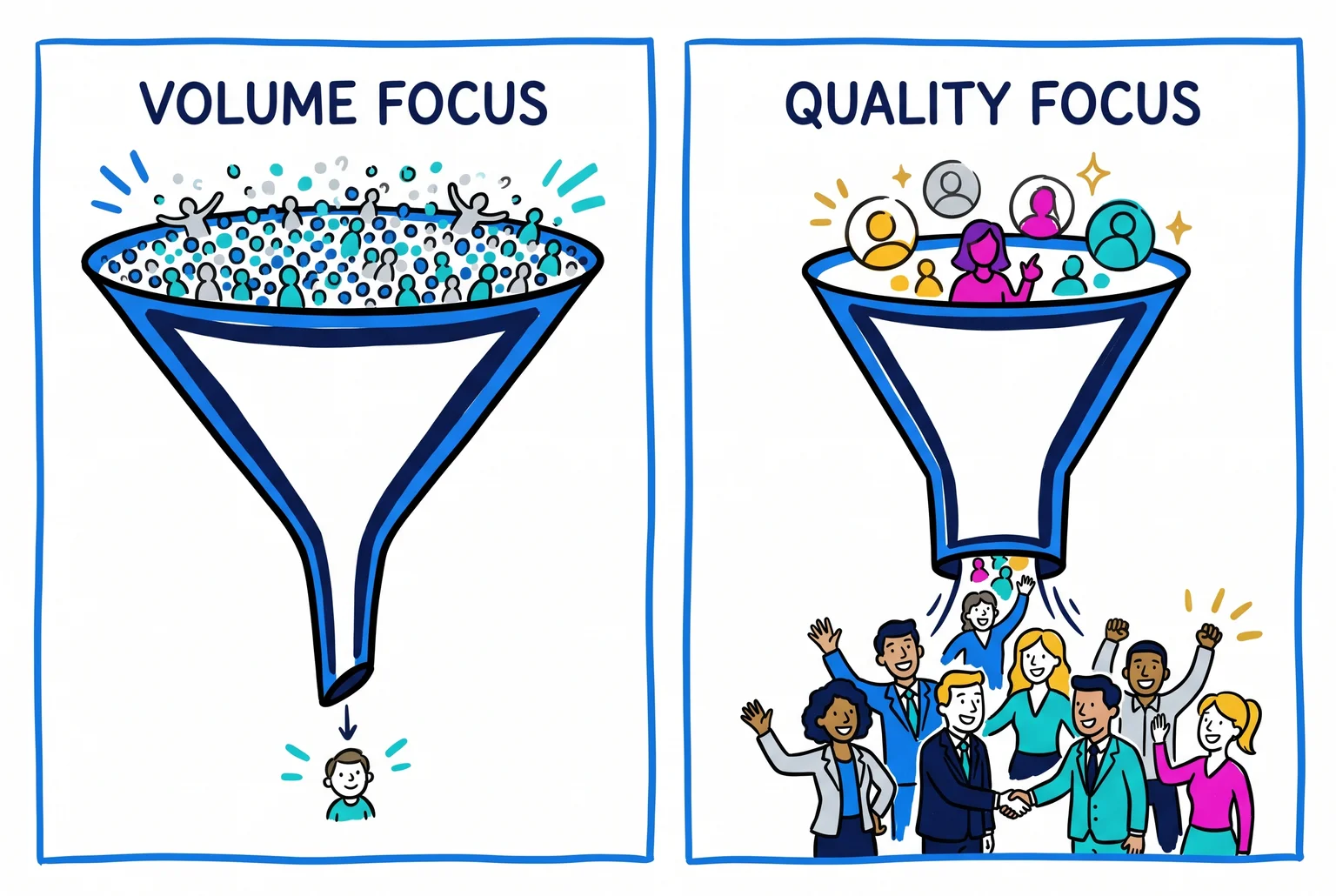
For established advisors, financial advisor lead generation usually fails on fit, not volume. Inquiries arrive, calls get booked, and the week fills up with prospects who are browsing, not ready, outside your minimum, or comparing fees across three firms. The goal is to engineer pre-qualified conversations, so the people who reach your calendar already know who you serve and how you work.
Key points
- More calls can mean less capacity for the prospects who would actually become clients.
- Clear niche language and professional content can screen people before they book.
- A first meeting should start with trust, not basic orientation.
Consider a hypothetical independent advisor who serves business owners approaching a sale. Most of her week goes to discovery calls. One prospect wants a quote on fees. Another owner is five years from any exit. A third has well under her minimum. Each call is polite and each takes an hour, and few go anywhere.
The numbers suggest she is not unusual. Advisors report spending 9% of their time prospecting and 5% on marketing, and in a 2026 survey, 72% said they wished they had more time for prospecting and deepening client relationships. A consulting estimate puts first-meeting conversion near 33%, so roughly two of every three first meetings do not become clients. The same source reports that niche practices convert AUM prospects at 41.1%, against 27.8% for generalists. That is one consulting estimate, and your results may differ.

Throughout this post, fit means the prospect matches your niche, service model, and minimum, and already understands how you work.
Why cost per acquired client is the number to watch
More leads add cost and calendar load before they add clients. Every inquiry takes a reply, a call, and a follow-up, and that time comes out of the hours you would spend with prospects who fit. Better leads shorten the sales cycle and protect that capacity.
Cost per lead is easy to read and easy to misjudge. Cost per acquired client counts everything it took to sign someone. Kitces defines client acquisition cost as hard-dollar spending plus the advisor's time, valued at the advisor's compensation rate. One widely cited figure puts the average at $3,119 per client, about $519 in marketing spend and $2,600 in advisor time. The study year and method behind it are unclear, so treat it as a reference point. Most of the cost is hours, which is why a cheap lead can become an expensive client.
Common Mistake: Ranking channels by cost per lead. A $40 lead who needs four calls and rarely closes can cost more than a $400 lead who arrives informed and closes more often. Low-cost sources like referrals or paid social can be expensive when conversion is weak, while SEO and niche positioning can cost more per lead and less per client.
Our running example makes the point. The advisor tries paid ads and gets plenty of inquiries from owners of every size and stage. Her content for owners preparing to sell produces fewer inquiries, but those prospects name the problem she solves before she asks. Her cost per lead is higher on the content side, and her cost per client may be lower.
To compare referrals, SEO and content, paid ads, purchased leads, and video, run the same worksheet on each:
- Count leads and clients with one definition, and calculate lead-to-client conversion as clients divided by leads.
- Add hard costs and advisor hours, priced at your own rate.
- Divide the total by clients signed over a fixed window.
- Record time to trust: the calls or weeks between first contact and a prospect who understands your process.
Published ranges run from roughly $338 to more than $25,000 per client depending on tactic, so your own numbers are more useful than a benchmark.
The tradeoff is a smaller top of funnel and a slower start. Referrals have the strongest record, at 67% of new clients in Schwab's 2024 study, but they are hard to scale on demand. Content and video take months to compound, and quarters with fewer inquiries are likely.
Define who you serve so the wrong prospects opt out
Positioning does the first round of qualification before anyone books a call. A visitor who reads "financial planning for business owners" sees nothing to rule themselves in or out. Kitces treats that phrasing as broad, and a sharper version is "Exit planning and wealth management for business owners preparing to sell their companies." Our running example advisor can use it, and an owner five years from retirement with no sale in mind now knows she is not the audience.
Quick Definition: A niche is the market you serve and the problem you solve. An ideal client is the specific person inside it, defined by situation and minimum.
A short checklist for defining the ideal client:
- Who: the role and type of owner or household.
- Situation: the trigger, such as a sale expected within a few years.
- Minimum: the asset level or fee where your service model works.
- Problem: what you solve, in the words prospects use.
Put that statement on the home page, in your bio, in video titles, and in articles. Specific, situation-based searches carry less volume but higher intent than "best financial advisor," so write for the phrases your owners type. Your bio and story then give them someone to recognize. The marketing plan template covers positioning in more depth.
Kitces Research found niche advisors set AUM fees 9% higher and spent 28% more time with clients and prospects. Those are averages, and they do not show every niche firm outgrows every generalist.
Narrowing can reduce inquiries, and you will turn some people away. Keep claims you can support. "We help business owners prepare for a company sale" is fine with a reasonable basis, while "the leading adviser for owner exits" needs evidence.
Use video to let prospects vet you before they call
A video library lets a prospect hear how you talk, what you believe about planning, how your process runs, and who you serve, all before anyone books time. An advisor serving business owners can answer "what happens after the sale?" once on camera instead of forty times on discovery calls. The prospect who books has already decided your approach makes sense.
That counts most where discovery happens without a referral. A 2026 survey found nearly half of investors with $5 million or more found their advisor without one, and many checked websites, Google, and YouTube along the way. In the 2025 Nitrogen survey, 30% of investors ranked trust and personal rapport first, ahead of track record at 22.6%. Rapport is hard to build in a PDF.
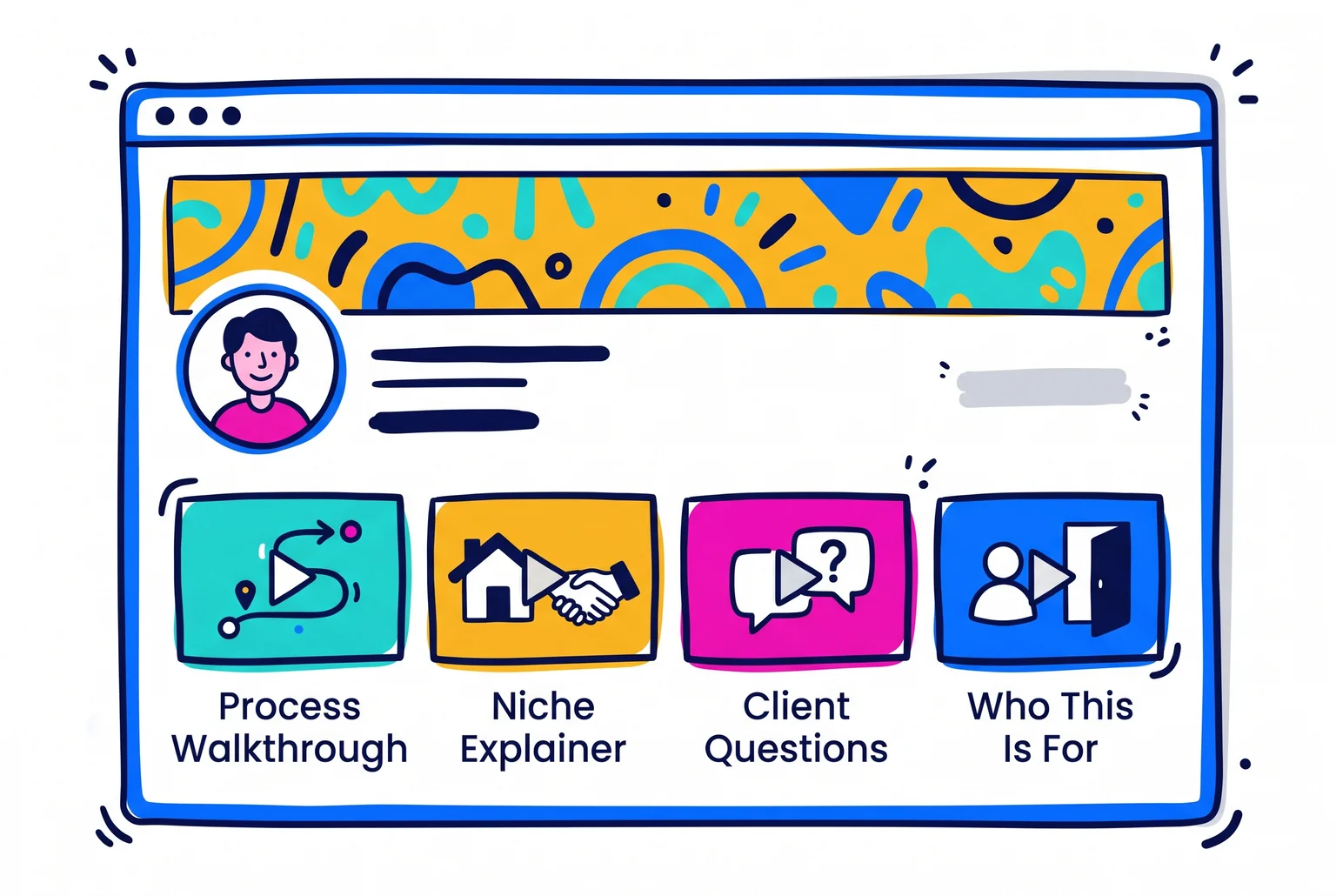
Four formats suit an established advisor:
- A process walkthrough covering the first meeting through the first year.
- A niche explainer, such as what owners should settle before a sale.
- A client-question series with answers of two to five minutes.
- A short "who this is for" piece stating the minimum and the situation plainly.
Professional production signals care. Clear audio, steady framing, and tight editing tell a prospect the firm sweats details, which is the quality they are hiring. YouTube works for both search and authority, and clips can be reused in email and social. In the YouGov survey, 22% of DIY investors used YouTube for investment information, so the audience is there but not universal. Pair it with a website built to convert so viewers have somewhere to go next.
Pro Tip: End every video with one clear next step and a plain statement of who you are not right for. The second line saves both of you a call.
Expect a few hours a month of your time and production costs that vary widely. As of this writing, Pro Financial Design's VideoPro plan is $999 per month with no setup fee or minimum contract, and it includes production, YouTube optimization, and email and social content.
Video can take months to compound, and general benchmarks, like the claim that sites with video convert at 4.8% versus 2.9%, are not advisor-specific. Video does not replace relationships or referrals, and results vary.
Build the path from first view to first meeting
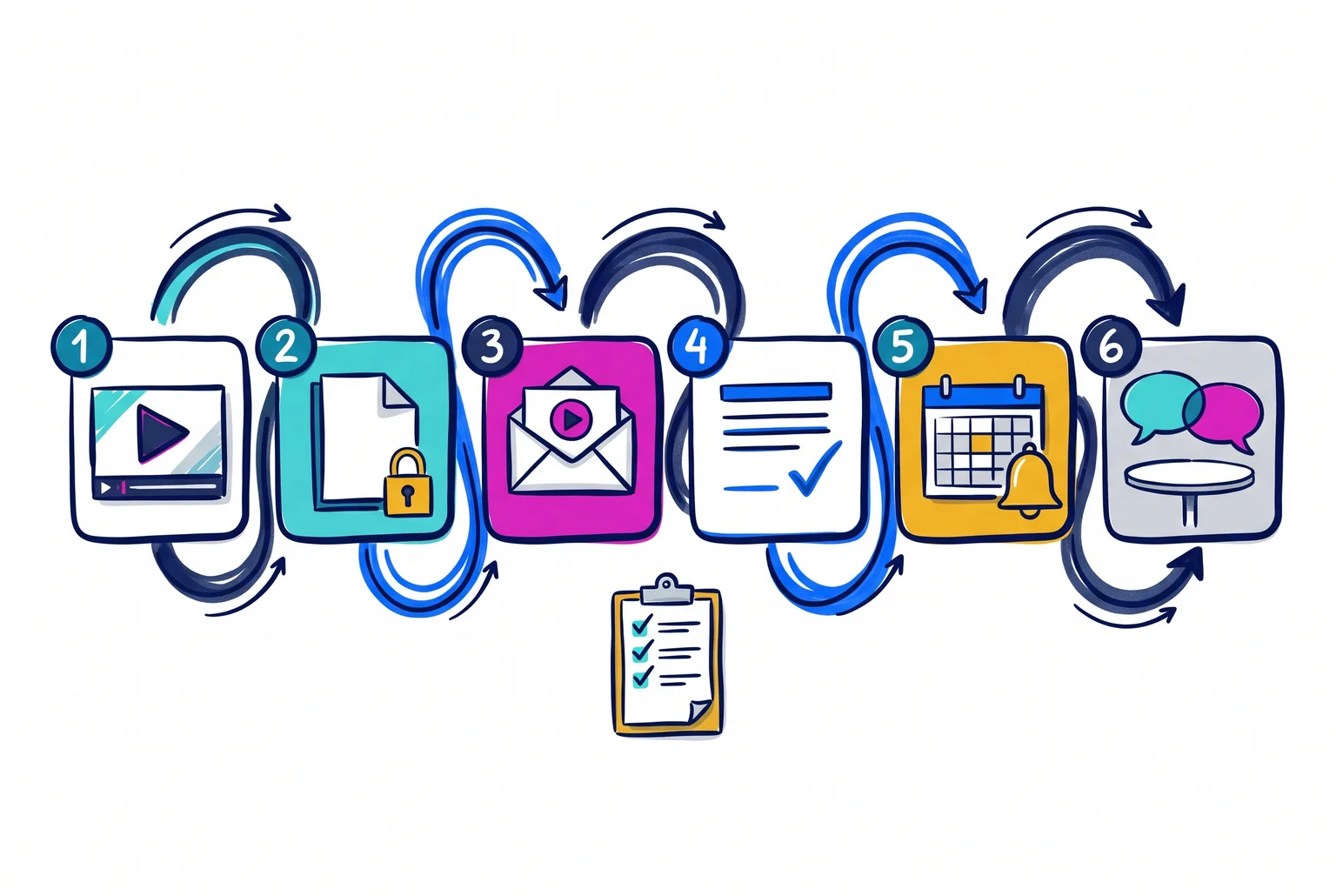
Most advisors have a website and some videos, but nothing connecting them to a calendar. A workable path has six steps, shown here with an advisor serving business owners approaching a sale.
- Feed it with content. Blog posts and videos that answer search questions, such as what owners should settle before a sale, bring in the right readers. Publishing to match those searches puts your keyword research to work.
- Offer a resource. A pre-sale readiness checklist or assessment, delivered immediately. Keep the form to name, email, and one qualifying question, since extra fields reduce completion.
- Send a short email sequence. Four to six emails over two to four weeks is typical. Each answers one question, such as who you serve, how the process works, or what the first meeting covers. Embed your process video in the third.
- Qualify lightly. Ask about goals, timeline, and general asset range. Skip account details.
- Book with context. Around days 7 to 10, invite them to a fit-and-next-steps conversation with a scheduling link and reminders.
- Open the meeting at a later stage. Start with their stated priorities and your process, not a tour of your background.
Social and paid traffic can feed the same path. LinkedIn can target owners by title and industry, and Facebook can reach them too, though both restrict financial-services ads. Meta limits some targeting options for special ad categories, and LinkedIn applies ad review to investment advice. Send that traffic to the resource, not the homepage.
Referrals follow the same logic. Only 17% of firms ask for referrals as a defined process, yet referrals from clients, friends, and family account for 54.2% of new clients. Ask a client whether they would email an introduction to one owner fitting a stated profile, then send that person your process video before you speak.
Automation suits delivery, reminders, and tracking. Keep the thank-you to the referrer, replies to questions, and the first message to a referred prospect personal. Track replies, qualified inquiries, bookings, and attendance separately, because a click is not an opportunity.
Compliance checks to build into your video workflow
Video that promotes your services may count as an advertisement under Rule 206(4)-1, the SEC Marketing Rule, including clips posted on social media. The rule also applies to organic content, not only paid distribution. This is general information, not legal advice, and which rules apply depends on whether you are an RIA or a broker-dealer representative. Broker-dealer reps answer to FINRA, which expects principal approval for certain social content. Confirm specifics with your compliance professional or counsel.
For RIAs, the main areas to watch are these:
- Fair and balanced. Ads should not contain untrue or misleading statements, or discuss benefits without treating material risks fairly. Avoid language implying guaranteed outcomes.
- Testimonials and endorsements. These generally require clear disclosure of whether the speaker is a client and whether they are paid, plus any conflicts. A written agreement is generally needed for promoters unless they are affiliates or receive $1,000 or less in 12 months.
- Performance. Gross figures generally need net figures shown with equal prominence. Hypothetical performance requires policies ensuring it suits the intended audience.
- Substantiation. Examiners look at whether you can support material factual claims.
Records matter too. RIAs must keep required records, including social media communications, for at least five years, in a form that can be searched and retrieved. FINRA sets a three-year minimum for registered reps. Follow-up calls and texts to leads can raise separate consent rules, such as the TCPA, so ask your counsel before automating outreach.

Treat each video as its own asset for review, since a single clip can carry a claim a campaign does not. A workable review step looks like this:
- Send the script to compliance before filming.
- List every factual claim and its support.
- Document any promoter arrangement and add disclosures on screen and in the description.
- Get approval of the final cut before publishing.
- Archive the final video, captions, and posts.
What to ask a lead generation partner before you sign
Lead generation companies for financial advisors usually sell one of four things: shared or exclusive leads, booked appointments, a monthly retainer for marketing work, or performance and referral fees. Prices vary by niche, geography, qualification, and exclusivity. Each model trades something. Purchased leads are fast but tend to arrive with the least context. Appointment setting removes execution work but may reduce your control over messaging and compliance workflow. Content-led marketing, such as websites, articles, and video, may produce fewer early inquiries while building trust and niche authority before anyone calls.
Judge any of them by attended meetings with niche-fit prospects, not by lead count or cost per lead. Ask these questions:
- Where do leads originate, and what intent did the person show?
- What are the qualification criteria, and who applies them?
- Does exclusivity cover the lead, the appointment, a geography, and a time period, in writing?
- How is an appointment defined, and what is the replacement policy for no-shows or poor fits?
- Who holds consent records, and who reviews scripts and messages for compliance?
- Can you export prospect data, and what does reporting show beyond volume?
- What is the total cost, including setup and minimum terms?
Opaque sources, missing consent records, vague appointment guarantees, and limited reporting are red flags. You remain accountable under the SEC Marketing Rule even when a vendor produces the material, including testimonials and endorsements.
A done-for-you partner makes sense when you have limited time and no in-house marketing. Pro Financial Design works only with advisors on websites, content, and professional video. It does not sell purchased leads or guarantee appointment volume, and its compliance-minded marketing approach is built around positioning you control.
Quick answers on video, referrals, metrics, and poor-fit prospects
How many videos do I need to start? A launch library of 10 to 15 videos is a practical target, not a proven threshold. Pick one niche topic cluster and publish on a sustainable schedule, such as one video every two to four weeks.
How long until video affects pipeline? Business channels often see first inbound leads in months 3 to 5, with compounding by months 12 to 18. Results vary.
Do referrals still matter? Yes. Send referred prospects your videos so they arrive informed.
How do I measure quality? Track fit rate, show rate (typically 65 to 85%), close rate (25 to 45% for independent RIAs), and days to close, by source.
Should I run paid ads? They can send niche-targeted traffic into the same path. Test them against cost per acquired client.
What about prospects who don't fit? Decline politely and refer them elsewhere if you can.
Audit your last 20 first meetings and plan what comes next
Better leads come from fit, trust, and readiness, not volume. Start with your last 20 first meetings. Score each 0 to 2 on fit (niche, minimum), trust (arrived knowing your process), and readiness (timeline, decision authority). Then write your ideal-client statement, outline three videos, and map the path to a booked meeting.
To review your positioning, website, and video approach together, book a call with Pro Financial Design.

About Cullen Fischel
Cullen Fischel is the lead designer at Pro Financial Design. So, if you’ve ever worked with us, you’ve worked with Cullen on strategy, design, and content creation for your project. Cullen’s got years of experience developing websites, brands, logos, lead magnets, digital marketing strategies, and social and email content for his clients. If you have any questions for him, just send us a message!

Want more financial advisor marketing tips and guides? Check out: